Tag Archives: math art

Andrew Hoyer, Cameron Browne, & Sphere Inversion

Welcome to this week’s Math Munch! Fractals, origami, math art, games, and a mind-bending video are all ahead, so let’s get into it.

Andrew Hoyer

Andrew Hoyer

First up, let’s take a look at the work of Andrew Hoyer.  According to his website, he’s a “software engineer in his mid-twenties living it up in sometimes sunny San Francisco.” I came across his work when I found his beautiful and completely engaging introduction to simple fractals.  (Go on! Click. Then read, experiment and play!)

Cantor Set

A Cantor set

At the bottom of that page, Andrew links to a wonderful, long list of fractals, arranged by Hausdorff dimension, which is a way of measuring fractals as being something like 2.5 dimensions.  A line is 1 dimensional.  A plane is 2D, and you can find many fractals with dimension in between!!  Weird, right?

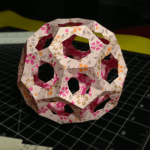
I was also really pleased to find Andrew’s Instagram feed, which features some of his beautiful origami creations.  Andrew’s agreed to answer your questions for an upcoming Q&A, so ask away!

Compound of 5 tetrahedra Truncated Icosahedron Cube Dodecahedron
Cameron Browne

Cameron Browne

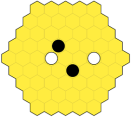
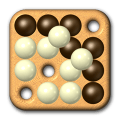
Up next, meet Cameron Browne. He’s an accomplished researcher who designs and studies games. Take a look at the many many games Cameron has created. The rules and descriptions are there, and Cameron sent along links to playable versions of a few, which you can find by clicking the pictures below.  For the third one, you’ll need to search for “Margo” or “Spargo.” For his research, Cameron investigates the possibilities of artificial intelligence, and how a computer can be used to generate games and puzzles.
Yavalath

Yavalath
description

Margo and Spargo

Margo and Spargo
description
description

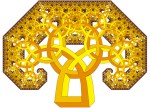
Cameron is also an artist, and he has a page full of his graphic designs.  I found Cameron through his page of Truchet curves.  I love the way his pages are full of diagrams and just enough information to start making sense of things, even if it’s not perfectly clear.  Cameron also has MANY pages of wonderful fractal-ish graphics: Impossible Fractals, Cantor Knots, Fractal Board Games, Woven Horns, Efficient Trees, and on and on…  And he has agreed to do a Q&A with us, so please, submit a question. What are you wondering?

A Cantor Knot

A Cantor Knot

A Truchet curve "Mona Lisa"

A Truchet curve “Mona Lisa”

An "impossible" fractal

An “impossible” fractal

And, as if that wasn’t enough mathy awesomeness, check out this video about turning a sphere inside out.  A bit of personal history, I actually used this video  (though it was only on VHS back then, checked out from the library) as part of the research for my independent research project during my senior year of college.  It gets pretty tricky, but if you watch it all the way through it starts to make some sense.

Have a great week.  Bon appetit!

Reflection sheet – Andrew Hoyer, Cameron Browne, & Sphere Inversion

Pentago, Geometry Daily, and The OEIS

Welcome to this week’s Math Munch!

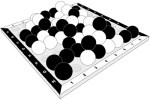
Pentago Board

Hurricane Sandy is currently slamming the East coast, but the Math Munch Team is safe and sound, so the math must go on.  First up, if you’ve visited our games page lately, you may have noticed a recent addition.  Pentago is a 2-player strategy with simple rules and an enticing twist.

  • Rules: Take turns playing stones.  The first person to get 5 in a row wins.  (5 is the “pent” part.)
  • Twist: After you place a stone you must spin one of the 4 blocks.  This makes things very interesting.

Why don’t you play a few games before you read on?  You can play the computer on their website, play with a friend by email, or download the Pentago iPhone app.  But if you’re ready, let’s dig into some Pentago strategy and analysis.

Mindtwister CEO, Monica Lucas

Mindtwister (the company that sells Pentago) put out a free strategy guide that names 4 different kinds of winning lines and rates their relative strengths.  The weakest strategy is called Monica’s Five, and it’s named after Mindtwister CEO and Pentago lover, Monica Lucas.  You can read our Q&A for more expert game strategies and insights.  We also had a chance to speak with Tomas Floden, the inventor of Pentago, so it’s a double Q&A week.

As you play, you start to build your own strategy guide, so let me share three basic rules from mine.  I call them the first 3 Pentago Theorems.  (A theorem is a proven math fact.)

  1. If you have a move to win, take it!  This one is obvious, but you’ll see why I include it.
  2. If your opponent is only missing one stone from a line of 5 you must play there.  It seems like you could play somewhere else and spin the line apart, but your opponent can play the stone and spin back!  The only exception to this rule is rule 1.  If you can win, just do that!
  3. 4 in a row, with both ends open will (almost always) win.  This is a classic double trap.  Either end will finish the winning line, so by rule 2 both must be filled, but this is impossible.  The exceptions of course will come when your opponent is able to win right away, so you still have to pay close attention.

Up next, check out the beautiful math art of Geometry Daily.

#288 Fundamental

#132 Eight Squares

#259 Dudeney’s Dissection

#296 Downpour

#236 Nova

#124 Cuboctahedron

#136 Tesseract

#26 Pentaflower

#92 Circular Spring

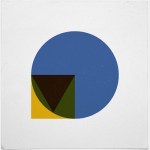
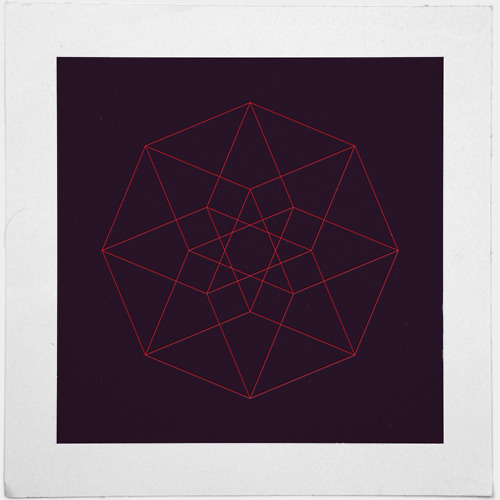
The site is the playground for the geometrical ideas of Tilman Zitzmann, a German designer and teacher, who’s been creating a new image every day for almost a year now!  He also took some time to write about his creative process, so if you’re interested, have a read.  Visit the Geometry Daily archives to view all the images.

Finally, an amazing resource – the On-Line Encyclopedia of Integer Sequences.  What’s the pattern here?  1, 3, 6, 10, 15, 21, …  Any idea?  Do you know what the 50th number would be?  Well if you type this sequence into the OEIS, it’ll tell you every known sequence that matches.  Here’s what you get in this case.  These are the “triangular numbers,” also the number of edges in a complete graph.  It also tells you formula for the sequence:

  • a(n) = C(n+1,2) = n(n+1)/2 = 0+1+2+…+n.

If you make n=1, then you get 1.  If n=2, then you get 3.  If n=5, you get the 5th number, so to get the 50th number in the sequence, we just make n=50 in the formula.  n(n+1)/2 becomes 50(50+1)/2 = 1275.  Nifty.  Who’s got a pattern that needs investigating?

Have a great week, and bon appetit!