Category Archives: Math Munch

Mobiles, Mathematical Objects, and Math Magazine

Welcome to this week’s Math Munch!

Before we start, a little business. You may have noticed that posts have been few and far between lately. Those of you who know us, the members of the Math Munch Team, know that we’ve all made a lot of life changes in the past year or two. We started out together teaching in the same school in New York– but now we live on far corners of the country and spend our time doing very different things. In case you’re curious, here are some pictures of the things we’ve been up to!
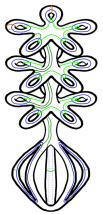
stack

Justin’s genus 19, rotationally symmetric surface

But even though we’ve moved apart physically, we’ve decided that we really want to keep the Math Munch Team together. We LOVE sharing our love of math with you– and we love hearing from you about the amazing things you make and do with math, too.

So, we’ve decided to revamp our posting process and came up with a schedule for when you can expect posts. There will be a new post every Thursday. (Though if Anna is posting from the West Coast, it might come out in the wee hours of Friday morning for some of you!) And here’s the monthly schedule of Thursday posts:

  • The first Thursday of the month will be a post from Justin
  • The second Thursday of the month will be a rerun!! Did you know we have over 150 posts on this site?? And we’ve been posting for almost five years??
  • The third Thursday of the month will be a post from Anna
  • The last Thursday of the month will be a post from Paul

And for those mysterious months with five Thursdays (ooh, when will that be, I wonder?)… There will be a surprise!

And now… for some math!
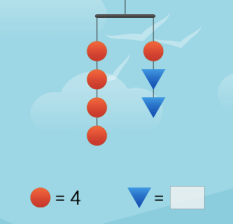
Screen Shot 2016-04-22 at 1.44.50 AMFirst up is a little game called SolveMe Mobiles! This game is full of little puzzles in which you have to figure out what each of the different shapes in a mobile weighs. You’re given different clues in different puzzles. So, for instance, in the puzzle to the left, you’re given the weight of the red circle and you have to figure out how much a blue triangle is. But you’re not given the weight of the whole mobile… Hmmm…
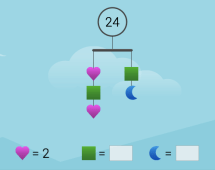
Screen Shot 2016-04-22 at 1.53.04 AMAnd this one, to the right, gives you the weight of one of the shapes and of the whole mobile– but now there are three shapes! Tricky!

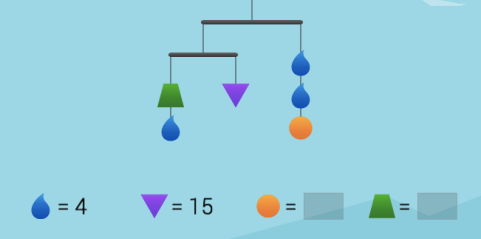
Even better, you can build your own mobile puzzle for others to solve! I made this one, shown below– like my use of a mobile within a mobile?
Screen Shot 2016-04-22 at 2.04.48 AM

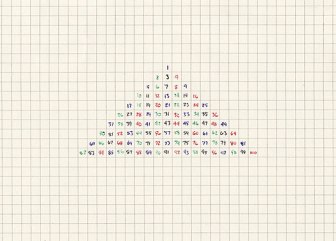
Next up, I found a beautiful Tumblr account that I’d like to share with you full of pictures of found mathematical objects. It’s called… Mathematical Objects! (How clever.) The author of the site writes that the aim of the blog is to “show that mathematics, aside from its practicality, is also culturally significant. In other words, mathematics not only makes the trains run on time but also fundamentally influences the way we view the world.
tumblr_mkkrp6acm11rnwsgbo1_540

“Counting to One Hundred with my Four-Color Pen”
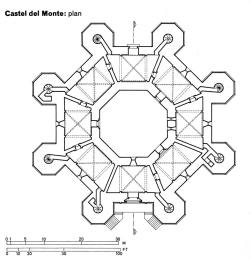
tumblr_n07pvisVvm1rnwsgbo2_1280Some of the images are mathematical art, like the one above; others are more “practical,” such as plans for buildings or images drawn from science.

Do you ever see an interesting mathematical object in the wild and feel the urge to take a picture of it? If so, go ahead and send it to us! We’d love to see what you find.

I’m very excited to share this last find with you all. It was sent to me by a wonderful math teacher, Mark Dittmer, and his math students. This year, they were inspired by Math Munch to make their own fun online math sites! I think what they made is super awesome– and I want to share it with you. I’ll be featuring some of their work in my next few posts, one thing at a time to give each its own day in the sun. First up is this adorable adventure story about the residents of Number Land. I hope you enjoy it!

Screen Shot 2016-04-22 at 9.46.00 AM

Bon appétit!


Mathy Clocks, Spirolaterals, and Mandalas

Welcome to this week’s Math Munch!

Screen Shot 2016-03-31 at 10.33.37 AM

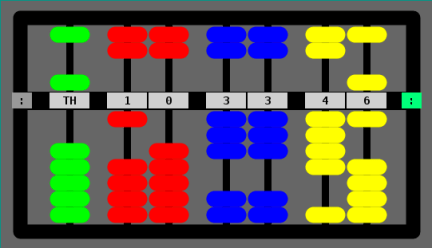
Hermann’s Abacus Clock. What time was I working on this post?

A few months ago, the Math Munch team got an email from retired mathematician Hermann Hoch with a lead to his amazing website full of (among other things)… clocks! One of the things Hermann does with his spare time in retirement is make creative math-y clocks using html. He calls them “html5 experiments”– and they really do take math art to the next level!

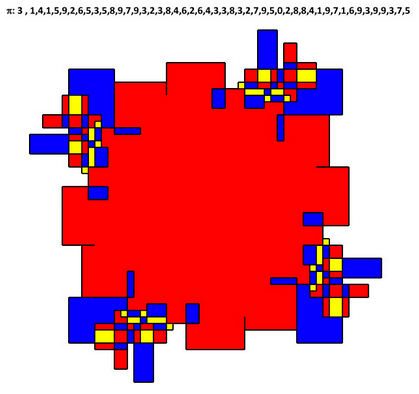
There are many fascinating clocks on Hermann’s site. (Be careful, or you might spend too much time watching the seconds go by!) One of my favorites is a clock he calls the Mondriaan Clock. The display is inspired by the art of Dutch painter Piet Mondriaan, who was known for his paintings of overlapping squares and rectangles in primary colors. The clock also comes with the exciting prompt– “wait until time creates golden ratios for us”! At what time will one of the rectangles in the image have dimensions that approximate the Golden Ratio? Hermann says that this question isn’t easy– he hasn’t even found all of the times himself! (And I’m sure he’d love to know– post your ideas in the comments below.)

Next up, I’ve been obsessed with Spirolaterals lately. What’s a Spirolateral, you ask? It’s a shape made by drawing segments of different lengths (say, 2, 3, and 4) one after another in a cycle (say, right, up, left, and down) until the shape closes up (or doesn’t, and you know it never will). If you follow those instructions (drawing on grid paper helps), you make this flower-like shape:

Screen Shot 2016-03-31 at 10.55.24 AM


You can make Spirolaterals (or Loop-de-Loops, as they’re also called) with any numbers and using any turning angle. This Spirolateral uses three numbers and a turning angle of 90 degrees. (See the square corners?) But what if you use four numbers? Five numbers? Thirteen numbers? You can try drawing by hand- and then coloring them in, to make a beautiful mathematical creation. The Spirolateral below uses the first 50 digits of pi!

Screen Shot 2016-03-31 at 11.00.37 AM.png

But you also don’t have to draw them by hand. The two Spirolaterals shown here were both drawn using a computer program! My favorite program for drawing Spirolaterals with 90 degree turns is this one, made by Chris Lusto. He gives great instructions and allows you to use as many numbers as you like!

But what if you wanted to make a Spirolateral with a… 109 degree turn? Wouldn’t that be cool! Well, yes, it is cool–

Screen Shot 2016-03-31 at 11.04.41 AM.png

You can make this and other crazy Spirolaterals at this awesome website, brought to us by The Mathenaeum.

Finally, I leave you with this mesmerizing video of Dearing Wang drawing a Mandala. If you thought you’d never use your skills with a straight-edge and compass you worked so hard to develop in Geometry class– think twice. And for you straight-edge and compass nerds, keep an eye out for his pentagon construction! Is it perfect??

Bon appetit!

Screen Shot 2016-03-31 at 11.13.27 AM.png

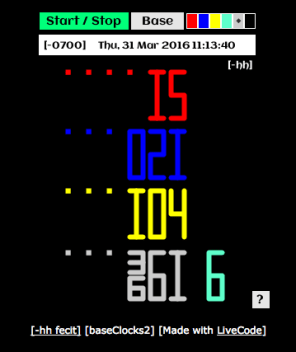
How long did it take me to make this post? (Hint: This clock tells time in base 6!)

2016, ScienTile, and a New Algorithm

Welcome to this week’s Math Munch!

In this week’s post we check out a tile designing contest from 2010, learn about some breakthrough news in computational algorithms, and get a DIY project to ring in the new year.

Speaking of the new year… welcome to the new year!! 2016 is 11111100000 in binary, by the way. Pretty cool right!? The five 0’s at the end tell you that 2016 has five 2’s in its prime factorization. That is, you can divide 2016 by 2 five times and still get a whole number. The big bunch of 1’s at the start means its also divisible by a number that is one less than a power of 2. 63, basically.

That is to say, 2016 = (26–1)(25). I think that signals a promising year. Bring it on.

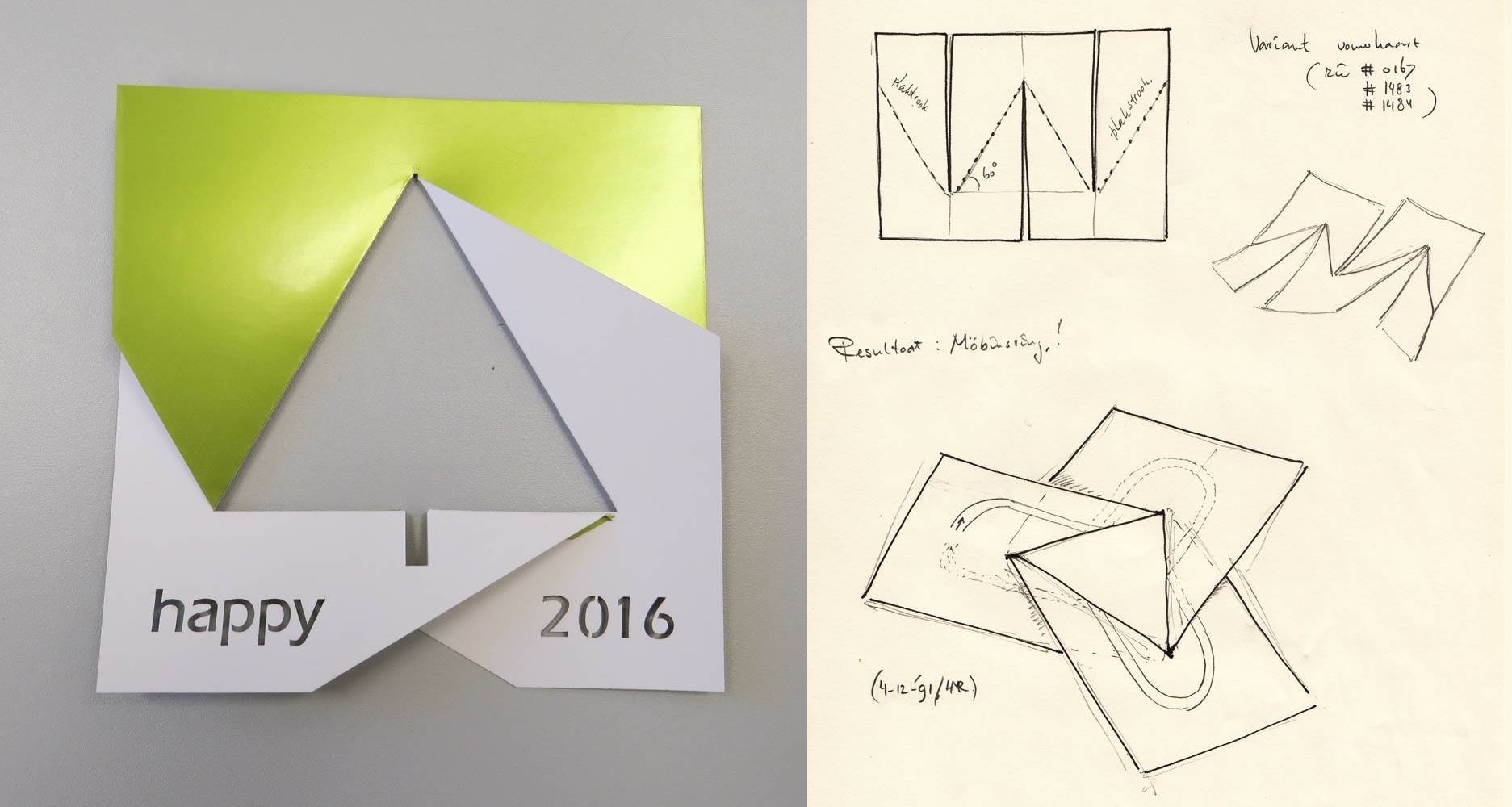
2016 card project

DIY Möbius strip project to ring in the new year

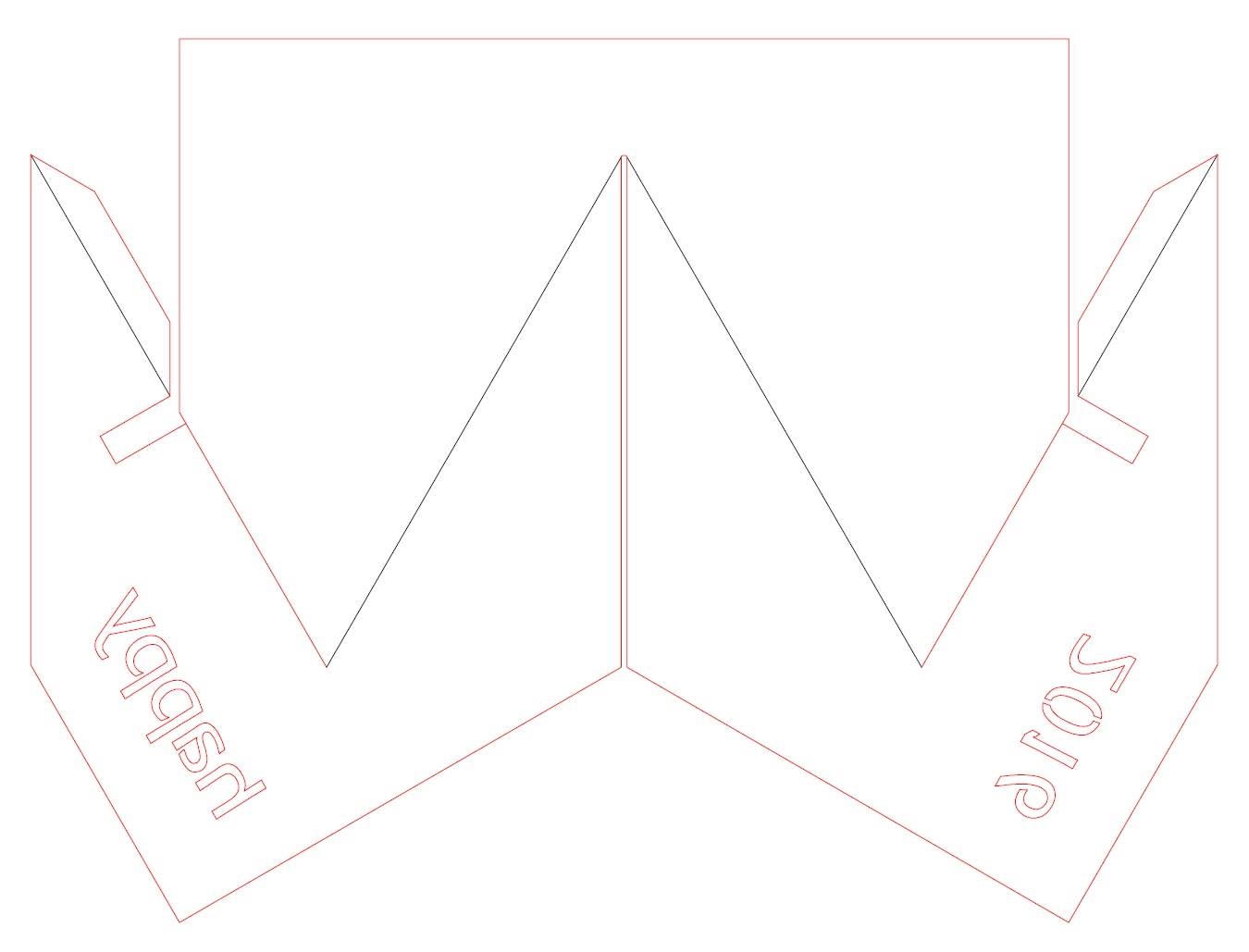
cord project template

template here

Here’s a great way to start your year off. How about a paper folding project from mathematical artist Rinus Roelofs? I found the project posted by imarginary.org on their facebook page. According to the post, “this card is the representation of a Möbius strip.”

Click here for the downloadable, printable, cuttable, foldable, template and make your own!

IMG_7017

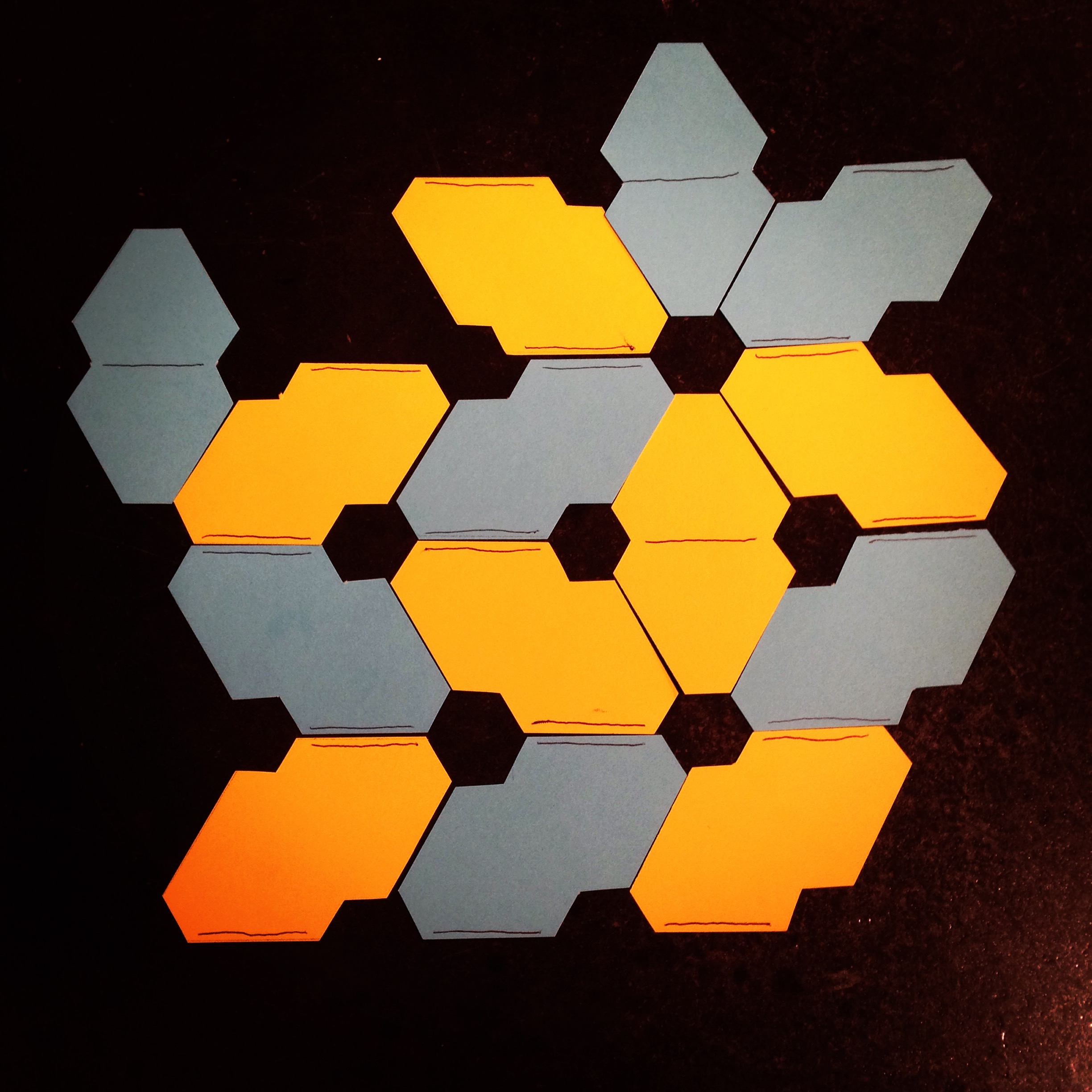
A tile pattern I designed. Anyone else thinking bee hive?

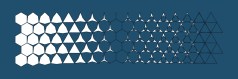
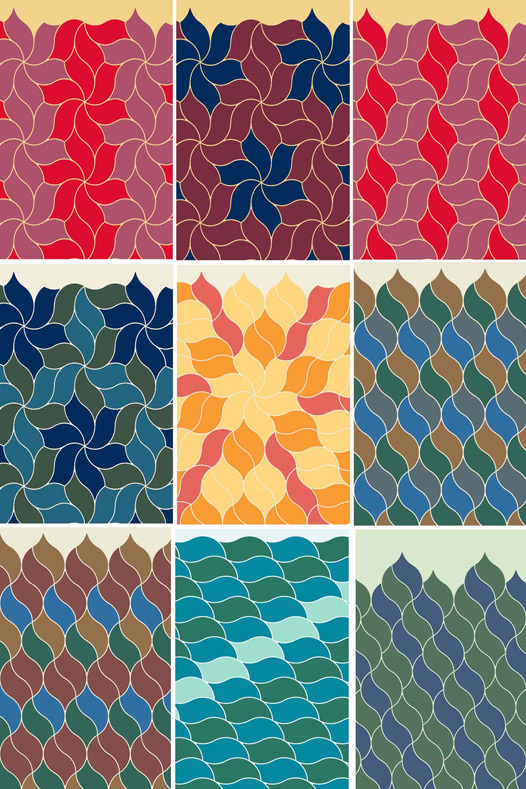
Up next, I’ve been playing a lot of board games that use square or hexagon tiles, and I’ve been thinking about what other tiles might make for a cool game. First off, here’s a little tile I came up with that always leaves hexagons in the places where they meet. Might make a neat game  where you build a bee colony. Who knows.  But in my searching for groovy tiles, I found ScienTile.

ScienTile was an “open tile design competition” initiated by Dániel Erdély, a Hungarian mathematician and mathematical artist featured previously on MM for his spidrons.  In fact, ScienTile was meant to commemorate the 2010 Bridges Conference, which was in Hungary. Sadly, I don’t think the ScienTile competition was repeated in later years, but the results from 2010 are quite beautiful. I was most struck by the picture below, a tile designed by Gabor Gondos. I also really liked this one by the wonderful Craig Kaplan (featured previously here), but all the submissions can be found here.

A gorgeous and flexible tile design by Gabor Gandos

A gorgeous and flexible tile design by Gabor Gondos

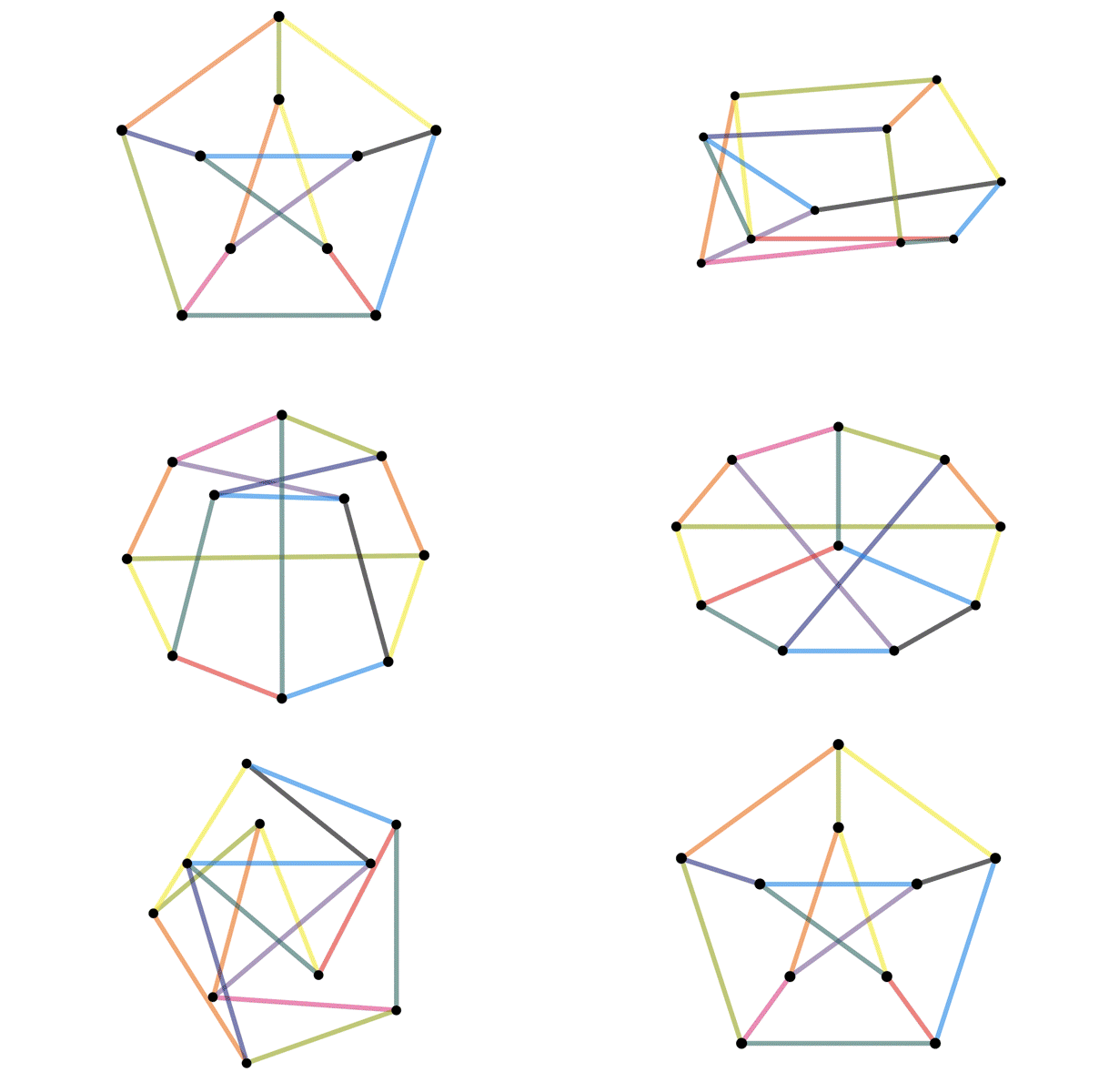
All these graphs are isomorphic, and the new algorithm could tell you that... really fast!

All these graphs are isomorphic, and the new algorithm could tell you that… really fast!

Finally, some breakthrough math news from the computational world. Computer scientists have develop a new fast algorithm for solving” the graph isomorphism” problem, which simply checks whether or not two graphs (think connect-the-dots pictures) are really the same. All the graphs in the gif on the right are isomorphic, because they can be morphed into each other without changing the connectivity of the dots.

636px-johnson_graph_j_5_2_.svg

The 5,2 Johnson Graph

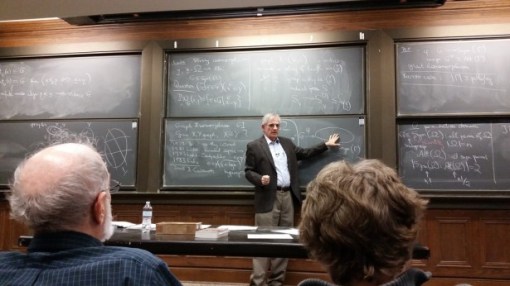
The new algorithm breaks a computational record that was unbroken for the last 30 years, which is a crazy long time in computer terms. Congratulations László Babai, who can be seen below presenting his breakthrough paper at the University of Chicago. His algorithm actually doesn’t cover all types of graphs, but Babai was able to show that the only type of graph not covered were the highly symmetric Johnson Graphs. You can see one of these on the right.

You can find more info on the record-breaking algorithm in this article from ScienceNews.org or this write up from Quanta Magazine.

babai_jeremykun_1024-615x346

László Babai presenting his record-breaking algorithm

Have a great week, and bon appetit!