Well, yes. That’s true. But something that’s wonderful about mathematics is that seemingly simple objects and problems can contain immense and surprising wonders.
How many squares can you find in this diagram?
As I’ve mentioned before, the part of mathematics that works on counting problems is called combinatorics. Here are a few examples for you to chew on: How many ways can you scramble up the letters of SILENT? (LISTEN?) How many ways can you place two rooks on a chessboard so that they don’t attack each other? And how many squares can you count in a 3×4 grid?
Here’s one combinatorics problem that I ran across a while ago that results in some wonderful images. Instead of asking about squares in a 3×4 grid, a team at the Dubberly Design…
It’s the final Thursday of September, so it’s time again for a recap of the month’s best from our Facebook page. This month we have a new sort of dice, a beautiful illustration of a numerical fact, and some wonderful new sculpture work from Rinus Roelofs. Let’s dig in.
First, check out this wonderful image. Meditate on it, and see if you can figure out what’s going on, even if you can’t understand the notation.
It’s showing us a simple way to compute a sum of cubes. They can be broken down and reconstructed as a square! Consider the sum of the first 3 cube numbers, for example: 1+8+27=36, and 36 is the square of 6. One step further, 6 is the sum of the first 3 numbers.
So in the picture above, the sum of the first 5 cubes is equal to the square whose side length is the sum of 1 through 5. AMAZING, and a beautiful illustration. Can you see why it always works, not just for 1 through 5? That’s key! And now test your understanding: What is the sum of the first 100 cube numbers?
Up next, we’ve met Henry Segerman plenty of times on Math Munch, including a look at the project he shares with Robert Fathauer, called The Dice Lab. They make mathematically interesting dice that have, in most cases, never been produced before. There newest creation (also last? see the video to see what I mean) is a 48-sided dice. Very cool. Can you think of a use for a 48-sided die? It sure looks cool. Reminds me of a rhombic dodecahedron. Do you see the connection?
Finally, another familiar face – the incredible mathematical artist, Rinus Roelofs – has been making incredible things. We met Roelofs in July, but his facebook page has been full of activity since then. His recent work has focused on double-covered polyhedra. You’ll have to click over and browse to see what I mean. Recently he posted a project I might want to take on. These are fold-up models for his creations. Check out the gallery below.
I’m not 100% sure how that cube one works, but I think I can figure it out, and I bet some of you can too. Of course, I’m sure we’ll make mistakes, but if we keep on learning, I bet we can get this figured out. If anyone ends up making a template of their own, email it to us and we’ll share it on the site.
Maybe you’re headed back to school this week. (We are!) Or maybe you’ve been back for a few weeks now. Or maybe you’ve been out of school for years. No matter which one it is, we hope that this new school year will bring many new mathematical delights your way!
A website that’s worth returning to again and again is the Wolfram Demonstrations Project (WDP). Since it was founded in 2007, users of the software package Mathematica have been uploading “demonstrations” to this website—amazing illuminations of some of the gems of mathematics and the sciences.
Each demonstration is an interactive applet. Some are very simple, like one that will factor any number up to 10000 for you. Others are complex, like this one that “plots orbits of the Hopalong map.”
Some demonstrations are great for visualizing facts about math, like these:

 How many squares can you find in this diagram?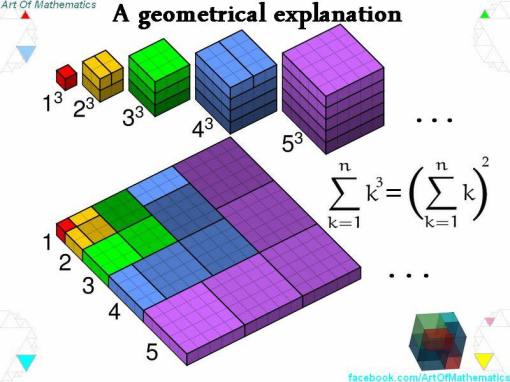
 Up next, we’ve met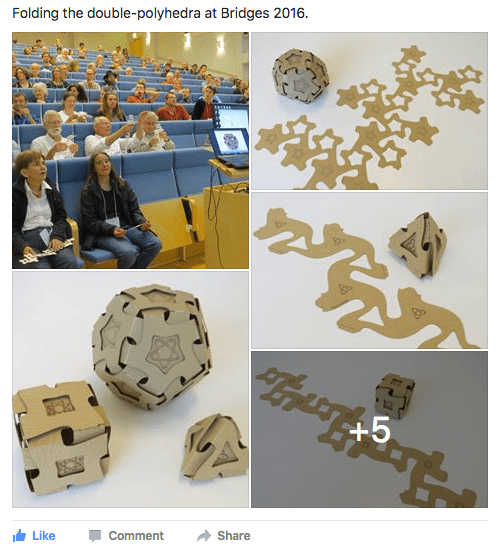
 Math Munch