Author Archives: Paul Salomon

Pentago, Geometry Daily, and The OEIS

Welcome to this week’s Math Munch!

Pentago Board

Hurricane Sandy is currently slamming the East coast, but the Math Munch Team is safe and sound, so the math must go on.  First up, if you’ve visited our games page lately, you may have noticed a recent addition.  Pentago is a 2-player strategy with simple rules and an enticing twist.

  • Rules: Take turns playing stones.  The first person to get 5 in a row wins.  (5 is the “pent” part.)
  • Twist: After you place a stone you must spin one of the 4 blocks.  This makes things very interesting.

Why don’t you play a few games before you read on?  You can play the computer on their website, play with a friend by email, or download the Pentago iPhone app.  But if you’re ready, let’s dig into some Pentago strategy and analysis.

Mindtwister CEO, Monica Lucas

Mindtwister (the company that sells Pentago) put out a free strategy guide that names 4 different kinds of winning lines and rates their relative strengths.  The weakest strategy is called Monica’s Five, and it’s named after Mindtwister CEO and Pentago lover, Monica Lucas.  You can read our Q&A for more expert game strategies and insights.  We also had a chance to speak with Tomas Floden, the inventor of Pentago, so it’s a double Q&A week.

As you play, you start to build your own strategy guide, so let me share three basic rules from mine.  I call them the first 3 Pentago Theorems.  (A theorem is a proven math fact.)

  1. If you have a move to win, take it!  This one is obvious, but you’ll see why I include it.
  2. If your opponent is only missing one stone from a line of 5 you must play there.  It seems like you could play somewhere else and spin the line apart, but your opponent can play the stone and spin back!  The only exception to this rule is rule 1.  If you can win, just do that!
  3. 4 in a row, with both ends open will (almost always) win.  This is a classic double trap.  Either end will finish the winning line, so by rule 2 both must be filled, but this is impossible.  The exceptions of course will come when your opponent is able to win right away, so you still have to pay close attention.

Up next, check out the beautiful math art of Geometry Daily.

#288 Fundamental

#132 Eight Squares

#259 Dudeney’s Dissection

#296 Downpour

#236 Nova

#124 Cuboctahedron

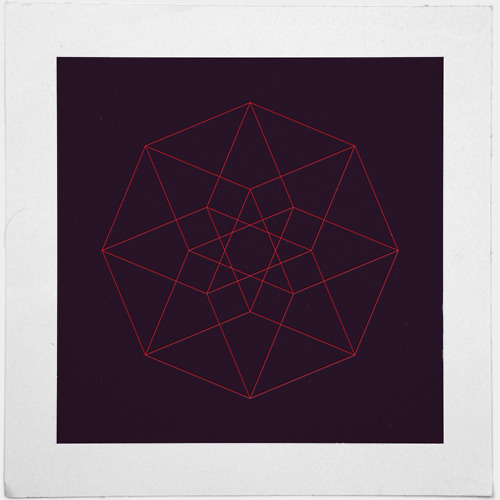
#136 Tesseract

#26 Pentaflower

#92 Circular Spring

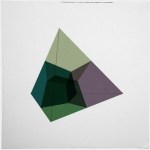
The site is the playground for the geometrical ideas of Tilman Zitzmann, a German designer and teacher, who’s been creating a new image every day for almost a year now!  He also took some time to write about his creative process, so if you’re interested, have a read.  Visit the Geometry Daily archives to view all the images.

Finally, an amazing resource – the On-Line Encyclopedia of Integer Sequences.  What’s the pattern here?  1, 3, 6, 10, 15, 21, …  Any idea?  Do you know what the 50th number would be?  Well if you type this sequence into the OEIS, it’ll tell you every known sequence that matches.  Here’s what you get in this case.  These are the “triangular numbers,” also the number of edges in a complete graph.  It also tells you formula for the sequence:

  • a(n) = C(n+1,2) = n(n+1)/2 = 0+1+2+…+n.

If you make n=1, then you get 1.  If n=2, then you get 3.  If n=5, you get the 5th number, so to get the 50th number in the sequence, we just make n=50 in the formula.  n(n+1)/2 becomes 50(50+1)/2 = 1275.  Nifty.  Who’s got a pattern that needs investigating?

Have a great week, and bon appetit!

Martin Gardner, G4G, and Many More Flexagons

Welcome to this week’s Math Munch!

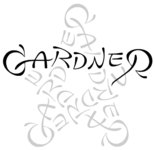
Meet the incredible Martin Gardner. If you’re a mathematician then chances are good you already have, but any reader of this blog has certainly felt the ripples of his influence. Nearly everything we share on Math Munch can be traced back to the recreational mathematics of Martin Gardner. For 25 years he wrote the “Mathematical Games” column for Scientific American, in which he shared wonderful puzzles, riddles, and games that have inspired generations of mathematicians. We’re trying to do the same here at Math Munch, so Gardner’s a sort of hero for us.

Maybe the best way to connect with this math legend would be to take on a few of his puzzles. (I’ve linked to some of my favorites below.) Many of the puzzles have a “Print ‘n Play” option you may want to take advantage of. His columns and other writings now live in the more than 100 books he wrote. Pick one up at your local library and dig in!

Martin Gardner’s Puzzles

Heavy Weight

Crazy Cut

Two Sipirals

Cube Dates

Scott Kim’s ambigram logo for G4G5

In this video you can hear Scott Kim (remember his ambigrams?) talk about his own connection to Martin Gardner, and here he talks about his involvement with the Gathering 4 Gardner. These are events that take place across the world to celebrate Gardner’s work and legacy. If you’re inspired by some of this stuff, maybe you’ll get a few friends together and share it with them.

Gardner’s very first article for Scientific American was about the hexaflexagon, so as part of this year’s Gathering 4 Gardner, people are making flexagons of all sorts. Here’s a video of Martin himself talking about them, which is part of full-length video about Gardner called “The Nature of Things.” Justin wrote about flexagons here, and Vi Hart followed suit with a pair of fantastic videos telling the true story of their discovery.

And here’s part 2.

That’s not all! There’s a whole world of flexagons to build and play with. To see another kind, check out the cyclic hexa-tetraflexagon as shown off by James Grime in this video.

A Flexagon Bestiary

Here’s one last flexagon resource with instructions you might prefer.  There are so many videos to watch, puzzles to solve, and flexagons to flex. Hopefully you’ll have a very mathy week in honor of Martin Gardner.

Bon appetit!

4 Million Digits, Fifteen Furlongs, and 5 Eames Vids

Welcome to this week’s Math Munch!

We’ve written about Pi before, but when I found this new way of visualizing the number, Pi, I knew I’d have to share it with you. In 2011, Shigeru Kondo and Alex Yee concluded an incredible project – to design and execute a program to calculate digits in the decimal expansion of Pi. What makes their attempt so remarkable is that the program ran for over a year (371 days), during which time it calculated precisely the first 10 trillion digits of Pi! (1 with 13 zeroes!)

A New York design firm, called Two-N, built a wonderful website using the first 4 million digits to help us see the patterns in the digits (or lack thereof). Each digit was assigned a color, and included in the image as a single pixel. What we see is a long (really long) string of colored digits. You can drag across the screen to zoom in on rows. There’s even a search bar so that you can find where your birthday appears, or any other 6-digit string for that matter.

If you’re having a hard time wrapping your head around 4,000,000 digits, check out Fifteen Furlongs. It’s a website designed by Kevin Wang, a college student at the University of Chicago, and it’s designed to help us understand different sizes and units of measurements. Try it.

Fifteen Furlongs? – “That’s about two minutes on the highway.” Didn’t help me  much, but 1 Furlong? – “That’s just under one Empire State Building tall.” Which is really interesting. So, if we laid down several empire state buildings in a row to make a highway, then I could drive over 15 of them in about 2 minutes. Cool! How can I understand 4 million?

  • 4 million pounds is the weight of 1,000 cars.  hmmmm.
  • 4 million cups is about one Olympic-sized pool.  whoa.
  • 4 million seconds is just over forty-six day’s time.  so cool.

Maybe you can play around and figure out just how big 10 trillion is. After each answer there’s a place for you to say whether or not the information was useful, which I assume they use that to improve the responses. Have fun.

Kevin agreed to answer a few questions for us, which you can read in our Q&A section.  If you have ideas for how to improve the site, Kevin wants to hear them. Just leave it in the comments, and he’ll see what he can do.

Finally, some mathematical videos by the well-known 20th century design team of Charles and Ray Eames. In 1961 they worked on an exhibition for IBM called “Mathematica: A World of Numbers and Beyond,” which included a huge timeline with descriptions of famous mathematicians and mathematical discoveries from antiquity to modern times. It also included a “mathematics peepshow,” a collection of fantastic short math films, some of which can be seen on YouTube:

Actually my favorites aren’t even available online! There are 5 more videos available in a new fantastic, free iPad app called Minds of Modern Mathematics. If you donwload the app, check out “Symmetry” and “Exponents.” They’re simply stunning.

The best-known Eames vid is probably Powers of Ten, (embedded below) their 1977 film meant to illustrate the incredible scale of the universe, big and small, and how exponents can help us keep track of the different “levels.” It surely inspired the Huang Twins when they designed The Scale of the Universe.

You know, we typically feature at least one video a week, and they’re starting to pile up! Good news, though: we’ve been keeping track on a YouTube playlist of every video ever Featured on Math Munch. You can also use the Videos link at the top of any page.

Have a great week. Bon appetit!