Author Archives: Paul Salomon

Marc Chamberland, Math Fonts, and Congruent Triangles

Welcome to this week’s Math Munch!
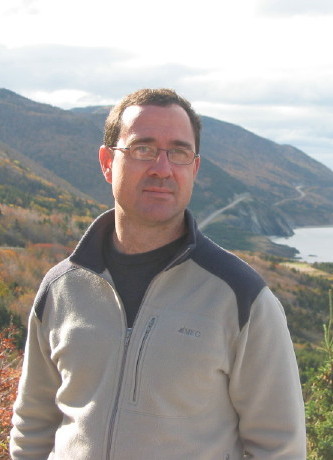
Marc Chamberland

Marc Chamberland

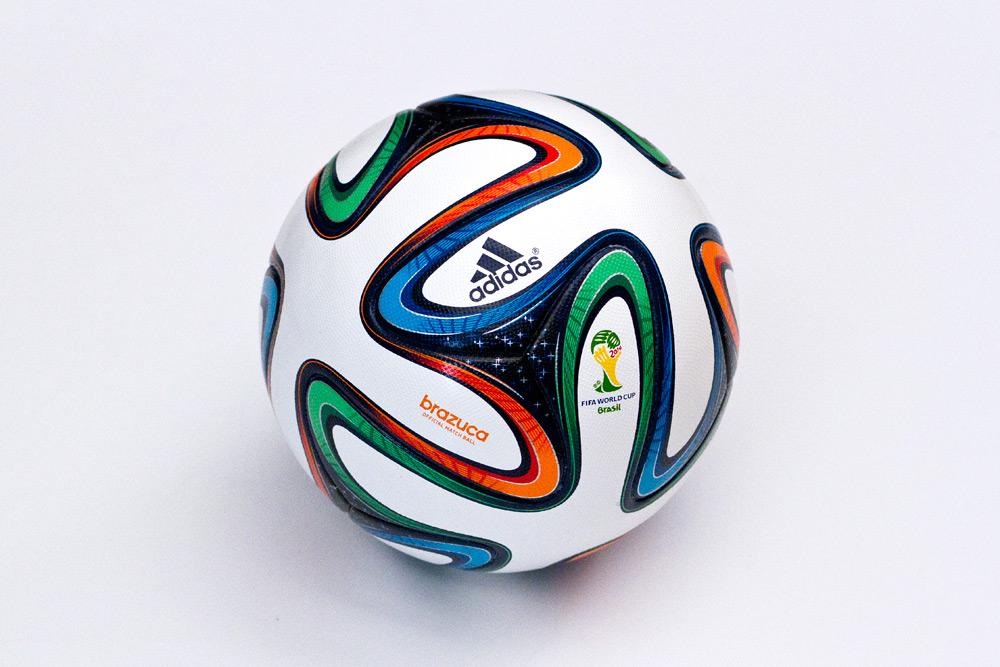
Up first, a follow up to our post about the World Cup a while back. We received an email from Marc Chamberland linking us to a nice little video (below) about World Cup Balls and their various properties. You may remember seeing Marc’s mathematical art in this post. Below you can see another nice piece that was included in the mathematical art exhibit at the 2013 Joint Mathematics Meetings. Click for a nice description of the math puzzle it solves.  (in short: What’s the area of the red square?)
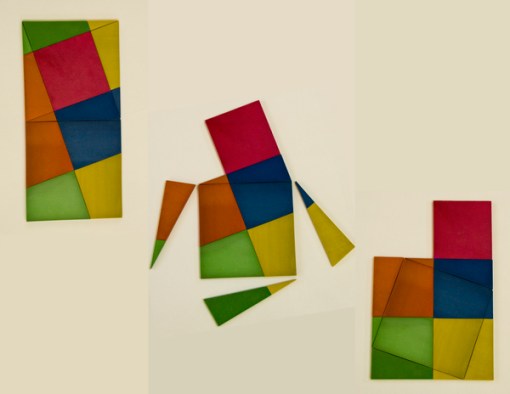
"Inner Square" by Marc Chamberland

“Inner Square” by Marc Chamberland

Marc is a math professor at Grinnell College. In March of 2014 (3-14?) he began working on Tipping Point Math, a youtube channel full of videos showing “math as you never imagined.” I encourage you to find something nice there. For now, here’s that video about World Cup Balls I promised you.

A font based on glass bending

A font based on glass bending

Up next are some nifty, fun fonts based on mathematics. Erik Demaine is no stranger to Math Munch readers, and it’s no wonder why. His stuff is clever and downright intriguing. He and his father Martin published a very interesting paper last April about a series of mathematical typefaces they’ve created over the course of their last decade of research and play.
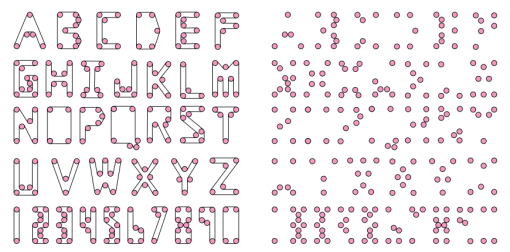
A Conveyor Belt Font by Erik and Martin Demaine

A conveyor belt typeface by Erik and Martin Demaine

Their paper was published to the arXiv (pronounced “archive”) where it is publicly available.  You can read it here. Or, if you like something slightly more plain-language, here’s a nice review over on medium.com.

Screen Shot 2014-09-15 at 9.05.54 PM Screen Shot 2014-09-15 at 9.07.28 PM
The 4051 Tektronix Graphics Terminal

The 4051 Tektronix Graphics Terminal

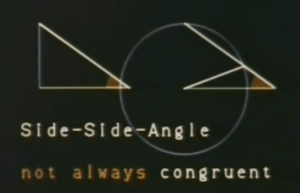
Finally, I want to share a sleepy little video called “Congruent Triangles.”  I like to think of it as a slice of mathematical cultural history. This film was made in 1977 on an early computer called a Tektronix 4051 Graphics Terminal. It was made by Bruce and Katherine Cornwell as part of a series of mathematical videos. The way the shapes move and deform to present the ideas and connect the pieces together is so very cool. I also love the choice of music. It tells you something about what math was like for people then. I’d say sort of “groovy.”

Screen Shot 2014-09-15 at 9.22.09 PMThere’s more to the story and many more cool videos to enjoy.  You can look forward to seeing more from the Cornwells, but for now, enjoy this one video and do some hunting on your own if you’re interested.  That’s called “research.”

Bon appetit!

The Art of Merete Rasmussen, a Game About Squares, and VAX!

Welcome to this week’s Math Munch! We’ve got a pair of new games for you to play later, but first I want to share something beautiful and impressive.

Hyperseeing Summer '14

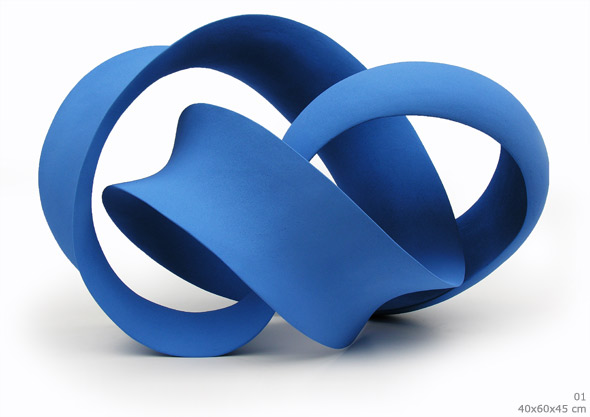
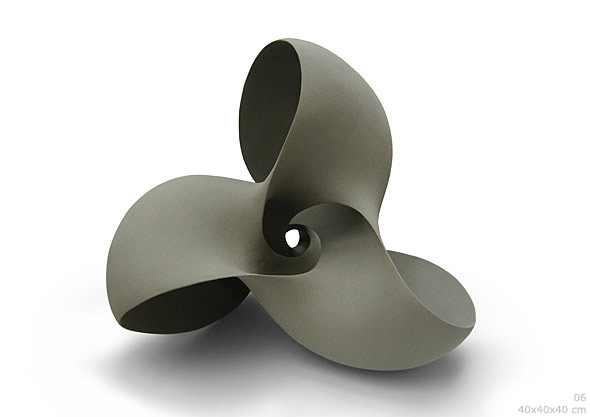
Ready for some mathematical art? The new issue of Hyperseeing begins with a review of Merete Rasmussen’s ceramic sculpture. Merete is a Danish artist who lives in London, and her recent work features complex and beautiful, smooth two-dimensional surfaces.

Editor Nat Friedman’s writeup begins with this wonderful quote by Rasmussen:


“I want to create a form that you can’t understand until you see the other side. You have to look at it for a while to realize how it is connected.”

Merete Rasmussen at work

Merete Rasmussen at work

A lot of mathematical work is done just trying to describe and understand the ideas or pictures in our head. Merete’s sculpture get us to do math as we try to understand the nature of her sculptural surfaces. How many sides do they have? How many edges? How many holes? I just love that.

Blue Gray

The article is very enjoyable, and I encourage you to read the entire text, but what got me hooked, what completely mesmerized and inspired me, was a video about Merete’s work and process that I found referenced at the end of the article. The video is presented in dual screen, which is really fantastic, because just like Merete’s sculptures, you may need to view it a couple of times to catch all that’s going on.

I recommend the full video. I recommend full screen.

You can learn more about Merete Rasmussen and view more of her work at her website, mereterasmussen.com.

* * *

OK, now on to a couple of new games.

Game About Squares

Game About Squares“Right from the start I was thinking about creating a simple game, with simple graphics and simple game design.” That’s what 26-yr old Andrey Shevchuk said about his recent creation, “Game About Squares.” You’ll find as you play, however, that these little puzzles can get oh so complicated, despite their simple presentation.

I love imagining how Andrey must have had to think creatively to keep developing his simple idea in new ways, and I love the way that the puzzles get us to think in new ways. All in all, this is just a wonderful game.

Oh, and thinking about the very viral 2048, Andrey had this to say,

“Squares are trendy.  Hexagons aren’t even close, let alone triangles.”

VAX!

Screen Shot 2014-08-08 at 9.29.36 PMThat’s short for vaccine, in case you don’t know.  The Salathé Group recently released a game about vaccinations and fighting the spread of epidemics (previously). The game is called VAX!, and it’s based on a graph theory representation for the spread of disease. Take the tour and you’ll learn everything you need to play.

There’s also a module that explains herd immunity. That’s where random vaccines are used to isolate the potentially infected from potential carriers of the disease.

Bon appetit.  Dig in!

The World Cup Group Stage, Math at First Sight, and Geokone

Welcome to this week’s Math Munch! We’ve got some World Cup math from a tremendous recreational mathematics blog and a new mathematical art tool. Get ready to dig in!

Brazuca: The 2014 World Cup Ball

Brazuca: The 2014 World Cup Ball

I’ve been meaning to share the really fantastic Puzzle Zapper Blog, because it’s so full of cool ideas, but the timing is perfect, because IT’S WORLD CUP TIME!!! and the most recent post is about the math of the world cup group stage! It’s called “World Cup Group Scores, and “Birthday Paradox” Paradoxes,” and I hope you’ll give it a read. (For some background on the Birthday Paradox, watch this Numberphile video called 23 and Football Birthdays.)

The thing that got me interested in the article was actually just this chart. I think it’s really cool, probably because I always find myself two games through the group stage, thinking of all the possible outcomes. If you do nothing else with this article, come to understand this chart. I was kind of surprised how many possible outcomes there are.

All Possible World Cup Group Stage Results

All Possible World Cup Group Stage Results

Long story short (though you should read the long story), there’s about a 40% chance that all 8 world cup groups will finish with different scores.

Alexandre Owen Muñiz, Author of Puzzle Zapper.  (click for an interview video about Alexandre's interactive fiction)

Alexandre Owen Muñiz, Author of Puzzle Zapper.  (click for an interview video about Alexandre’s interactive fiction)

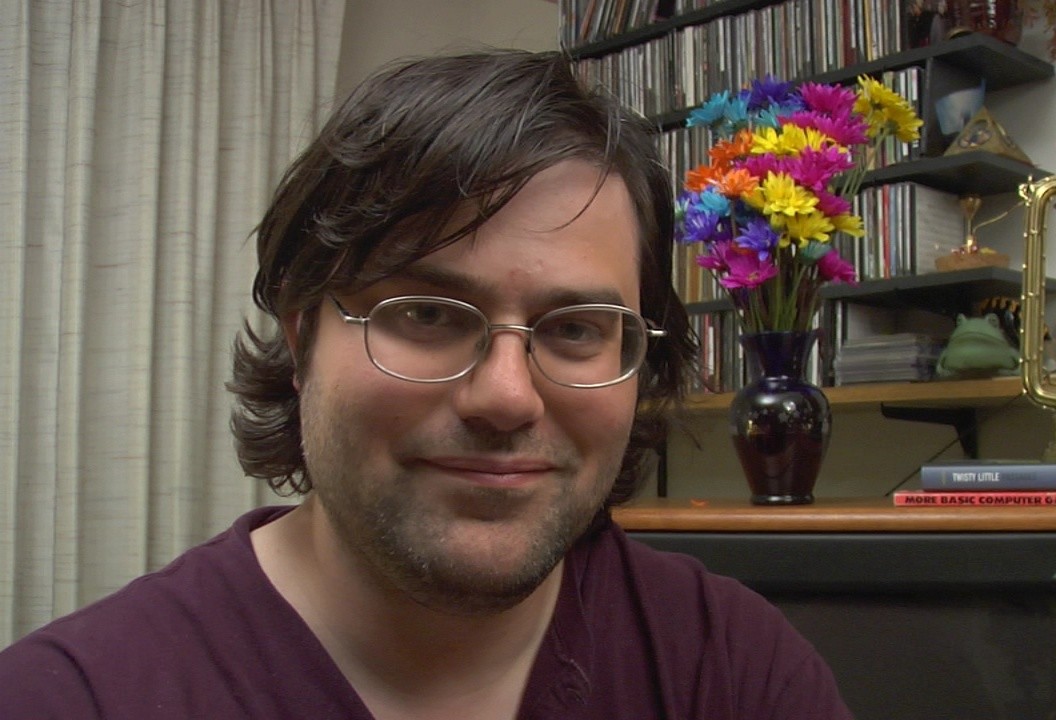
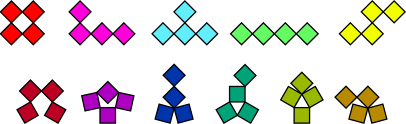
Puzzle Zapper is the recreational mathematics blog of Alexandre Owen Muñiz. You can also find much of his work on his Math at First Sight site. He has a lot of great stuff with polyominoes and other polyforms (see the nifty pics below). Alexandre is also a writer of interactive fiction, which is basically a sort of text-based video game. Click on Alexandre’s picture to learn more.

The Complete Set of "Hinged Tetriamonds"

The complete set of “hinged tetrominoes”

A lovely family portrait of the hinged tetriamonds.

A lovely, symmetric family portrait of the “hinged tetriamonds”

I hope you’ll poke around Alexandre’s site and find something interesting to learn about.

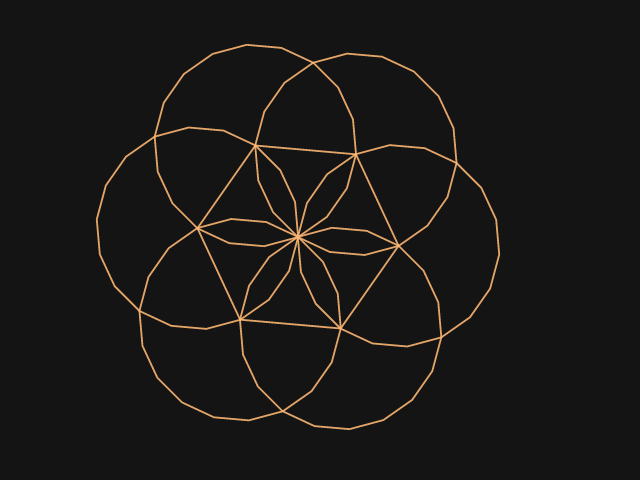
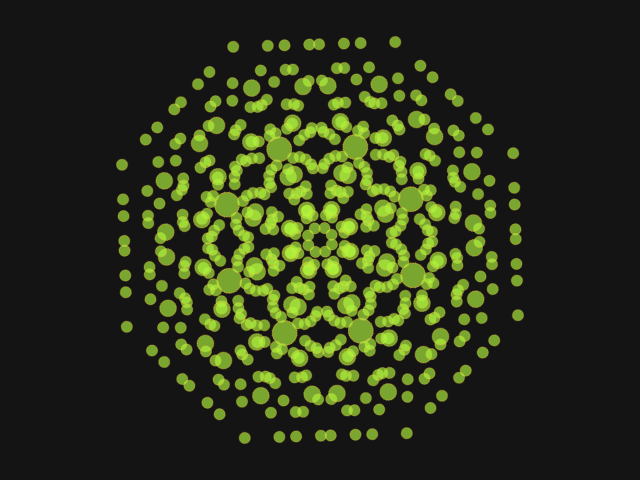
For our last item this week, I’ve decided to share a new mathematical art tool called Geokone. This app is a recursive, parametric drawing tool. It’s recursive, because it is based on a repeating structure, similar to those exhibited by fractals, and it’s parametric, because the tool bar on the right has a number of parameters that you can change to alter the image. The artistic creation is in playing with the parameter values and deciding what is pleasing. Below are some examples I created and exported.

geokone2 geokone1

geokone3

I have to say, Geokone is not the easiest thing in the world to use, but if you spend some time playing AND thinking, you can almost certainly figure some things out! As always, if you make something cool, please email it to us!

Now go create something!  Click to go to Geokone.net.

I hope you find something tasty this week. Bon appetit!