Category Archives: Math Munch

We Use Math, Integermania, and Best-of-Seven

Welcome to this week’s Math Munch!

astronaut“When will I use math?” Have you ever asked this question? Well, then you are in for a treat, because the good people of We Use Math have some answers for you! This site was created by the Math Department at Brigham Young University to help share information about career paths that are opened up by studying mathematics. Here’s their introductory video:

The We Use Math site shares write-ups about a wide range of career opportunities that involve doing mathematics. I was glad to learn more about less-familiar mathy careers like technical writing and cost estimation. Also, my brother has studied some operations management in college, so it was great to read the overview of that line of work. In addition, the We Use Math site has pages about recent math discoveries and about unsolved math problems. Check them out!

Next up is one of my long-time favorite websites: Integermania!

Perhaps you’ve heard of the four 4’s problem before. Using four 4’s and some arithmetic operations, can you make the numbers from 1 to 20? Or even higher? Some numbers are easy to make, like 16. It’s 4+4+4+4. Some are sneakier, like 1. One way it can be created is (4+4)/(4+4). But what about 7? Or 19? This is a very common type of problem in mathematics—which math objects of a certain type can be built with limited tools?

swilson21-e1315080873212

Steven J. Wilson

Integermania is a website where people from around the world have submitted number creations made of four small numbers and operations. It’s run by Steven J. Wilson, a math professor at Johnson County Community College in Kansas. (Steven has even more great math resources at his website Milefoot.com)

There are many challenges at Integermania: four 4’s, the first four prime numbers, the first four odds, and even the digits of Ramanujan’s famous taxicab number (1729).
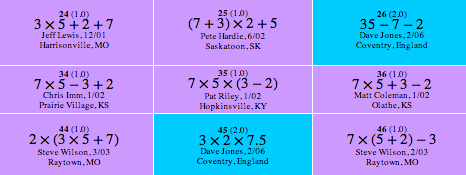
Here are some number creations made of the first four prime numbers. Can you make some of your own?

Here are some number creations made of the first four prime numbers.
Can you make some of your own?

One of my favorite aspects of Integermania is the way it rates number creations by “exquisiteness level“. If a number creation is made using only simple operations—like addition or multiplication—then it’s regarded as more exquisite than if it uses operations like square roots or percentages. I also love how Integermania provides an opportunity for anyone to make their mark in the big world of mathematical research—it’s like scrawling a mathematical “I wuz here!” After years of visiting the site, I just submitted for the first time some number creations of my own. I’ll let you know how it goes, and I’d love to hear about it if you decide to submit, too.

Here are recaps of all the World Series since 1903 from MLB.com

Here are recaps of all the World Series since 1903 from MLB.com

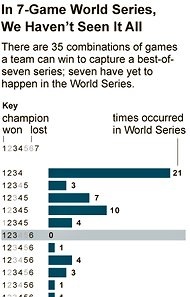
Now coming to the plate: my final link of the week! Monday was the first day of the new Major League Baseball season. I want to share with you a New York Times article from last December. It’s called Keeping Score: Over in Four About a Fifth of the Time. The article digs into the outcomes of all of the World Series championships—not so much who won as how they won. It takes four victories to win a seven-game series, and there are 35 different ways that a best-of-seven series can play out, put in terms of wins and losses for the overall winner. For instance, a clean sweep would go WWWW, while another sequence would be WWLLWW. The article examines which of these win-loss sequences have been the most common in the World Series.

(Can you figure out why there are 35 possible win-loss sequences in a seven-game series? What about for a best-of-five series? And what if we tried to model the outcome of a series by assuming each team has a fixed chance of winning each game?)
worldseriesstats

A clip of the stats that are displayed in the Times article. Click through to see it all.

I was curious to know if the same results held true in other competitions. Are certain win-loss sequences rare across different sports? Are “sweeps” the most common outcome? After sifting through Wikipedia for a while, I was able to compile the statistics about win-loss sequences for hockey’s Stanley Cup Finals. This has been a best-of-seven series since 1939, and it has been played 73 times since then. (It didn’t happen in 2005 because of a lockout.) You can see the results of my research in this document. Two takeaways: sweeps are also the most common result in hockey, but baseball more frequently requires the full seven games to determine a winner.

It could be a fun project to look at other best-of-seven series, like the MLB’s League Championship Series or basketball’s NBA Finals. If you pull that data together, let us know in the comments!

Batter up, and bon appetit!

******

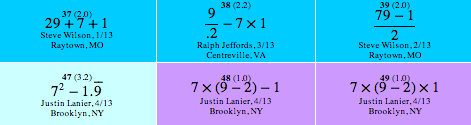
UPDATE (4/4/13): My first set of five number creations was accepted and are now posted on the Ramanujan challenge page. Here are the three small ones! Can you find a more exquisite way of writing 47 than I did?
myintegermania

Sam Loyd, Weight Problems, and Exercises

Welcome to this week’s Math Munch!

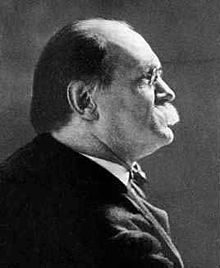
Chess master, puzzlist, and recreational mathematician Sam Loyd. GREAT mustache.

Chess composer, puzzlist, and recreational mathematician Sam Loyd. GREAT mustache.

First up, remember Sam Loyd?  (We’ve featured him twice before.)   He was an american chess player and recreational mathematician who lived from 1841-1911.  He was also a chess composer, someone who writes endgame strategies and chess puzzles.  In fact, he wrote all sorts of puzzles, which his son published in a book called Sam Loyd’s Cyclopedia of 5000 Puzzles, Tricks, and Conundrums.  (That link will take you to a scan of all 385 pages!)  By the way, those 5000 puzzles are only about half of the ones he wrote in his lifetime.  It’s no wonder Martin Gardner called him “America’s greatest puzzler.”  An interesting anecdote: Sam Loyd claimed until his death to have invented the 15 puzzle, but in fact he did not.  The actual inventor was Noyes Chapman, the Postmaster of Canastota, NY.

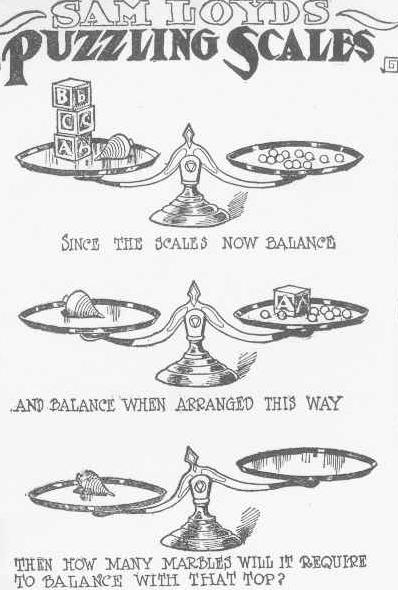
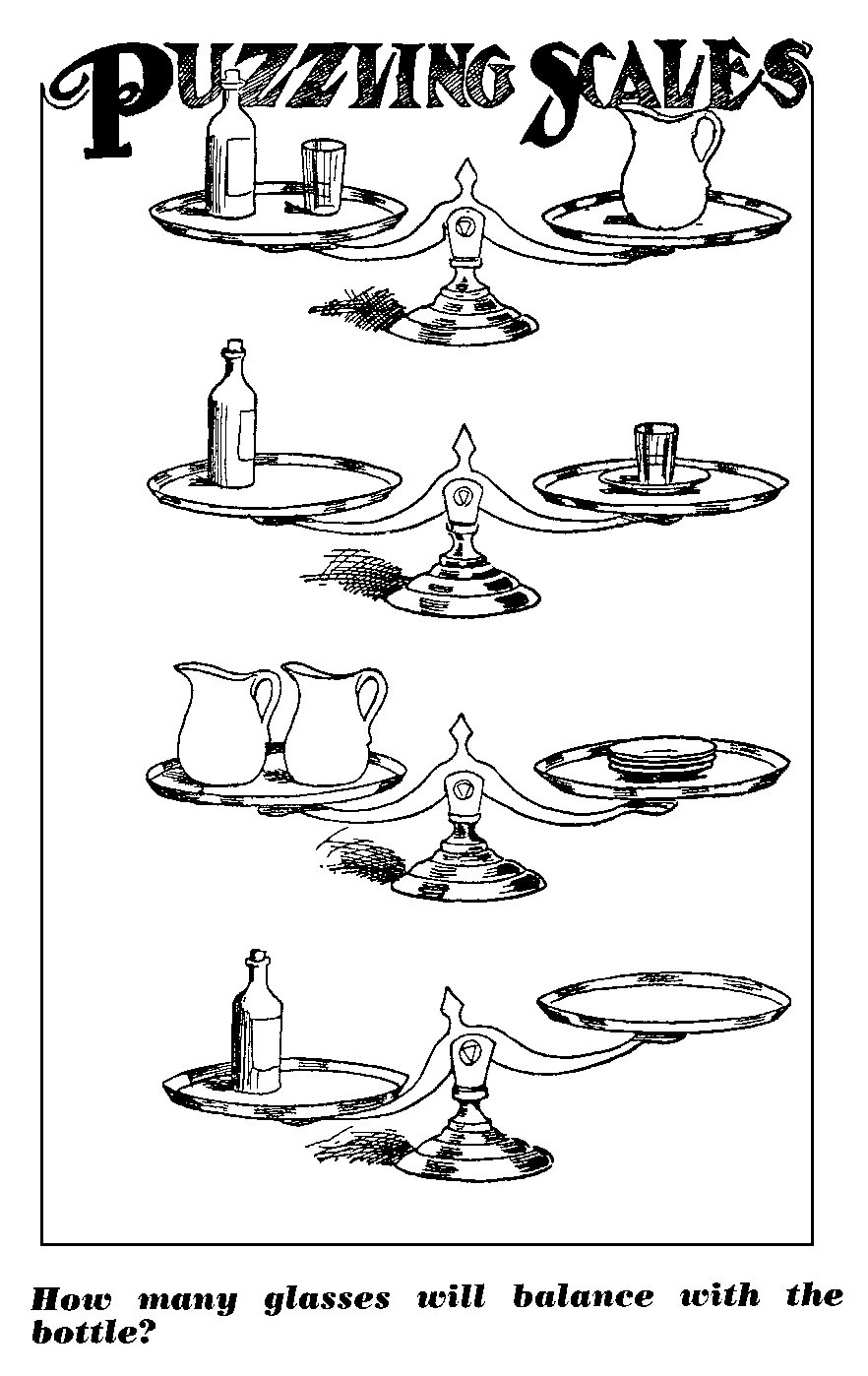
I wanted to show you some of Sam’s “Puzzling Scales” problems.  Why don’t you stop reading now and just solve them both?

Puzzling Scales 1 Puzzling Scales 2
Torque puzzle 1

These different weights balance because of the torque they apply

There are lots of puzzles like this, based on different weights balancing with each other.  A friend sent me this page of weight puzzles based on the idea of torque.  The farther out an object is placed, the more torque it applies to the balance, so it’s possible for a 1 pound weight to balance a 2 pound weight if you set them at the right distances.  The distance and wight multiply to give the torque applied.

These problems come from a massive bank of puzzles over on Erich’s Puzzle Palace.  If you like, you can also play this torque game I found.

Torque puzzle 1

Place 1 through 5 to balance the weights.

Torque puzzle 2

Place 1 through 6 to balance the weights.

I love problems like this, but I started to wonder, “what if the scales don’t balance?  Maybe you could make a puzzle out of that.”  I did exactly that, creating a series of imbalance puzzles.  Your job is to order the shapes by weight.  They start out easy, but there are some tricky ones.  I especially like #6.

In each case, order the three objects by weight.

Imbalance 1 Imbalance 2 Imbalance 3

I’m also hosting an imbalance puzzle-writing contest.  My two favorite puzzlists will win a print of their choosing from my Stars of the Mind’s Sky series of mathematical art.  You should try your hand at writing one.  Just email it to Lost in Recursion.

Finally – we all love great problems and puzzles, but skill building is an important aspect of mathematics as well, and exercises help us build skill.  Exercises are often dull, but I found a website with some exercises I quite like, and I wanted to share them with you.  Check out the Coffee Break section over on StudyMaths.co.uk.

Detention Dash

Detention Dash

Find the Primes

Find the Primes

Odd One Out

Odd One Out

Detention Dash, for example, is just a timed multiplication chart, but typing the answers in on my computer really made me feel some of the patterns in the numbers.  You should try it.  Odd One Out also keeps you on your toes and makes you think about different kinds of numbers.  I find them surprisingly fun.  I hope you agree.

Bon appetit!

Maths Ninja, Folding Fractals, and Pi Fun

Welcome to this week’s Math Munch!

ninjaFirst up, have you ever been stuck on a gnarly math problem and wished that a math ninja would swoop in and solve the problem before it knew what hit it?  Have you ever wished that you had a math dojo who would impart wisdom to you in cryptic but, ultimately, extremely timely and useful ways?  Well, meet Colin Beverige, a math (or, as he would say, maths) tutor from England who writes a fun blog called Flying Colours Maths.  On his blog, he publishes a weekly series called, “Secrets of the Mathematical Ninja,” in which the mathematical ninja (maybe Colin himself?  He’s too stealthy to tell)  imparts nuggets of sneaky wisdom to help you take down your staunchest math opponent.

colin_bridgeFor example, you probably know the trick for multiplying by 9 using your fingers – but did you know that there’s a simple trick for dividing by 9, too?  Ever wondered how to express thirteenths as decimals, in your head?  (Probably not, but maybe you’re wondering now!)  Want to know how to simplify fractions like a ninja?  Well, the mathematical ninja has the answers – and some cute stories, too.  Check it out!

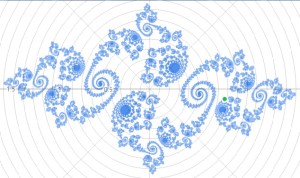
A picture of the Julia set.

A picture of a Julia set.

Next, I find fractals fascinating, but – I’ll admit it – I don’t know much about them.  I do know a little about the number line and graphing, though.  And that was enough to learn a lot more about fractals from this excellent post on the blog Hackery, Math, and Design by Steven Wittens.  In the post How to Fold a Julia Fractal, Steven describes how the key to understanding fractals is understanding complex numbers, which are the numbers we get when we combine our normal numbers with imaginary numbers.

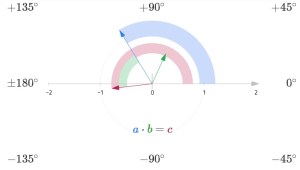
complex multiplicationNow, I think imaginary numbers are some of the most interesting numbers in mathematics – not only because they have the enticing name “imaginary,” but because they do really cool things and have some fascinating history behind them.  Steven does a really great job of telling their history and showing the cool things they do in this post.  One of the awesome things that imaginary numbers do is rotate.  Normal numbers can be drawn on a line – and multiplying by a negative number can be thought of as changing directions along the number line.  Steven uses pictures and videos to show how multiplying by an imaginary number can be thought of as rotating around a point on a plane.

here comes the julia set

A Julia set in the making.

The Julia set fractal is generated by taking complex number points and applying a function to them that squares each point and adds some number to it.  The fractal is the set of points that don’t get infinitely larger and larger as the function is applied again and again.  Steven shows how this works in a series of images.  You can watch the complex plane twist around on itself to make the cool curves and figures of the Julia set fractal.

Steven’s blog has many more interesting posts.  Check out another of my favorites, To Infinity… and Beyond! for an exploration of another fascinating, but confusing, topic – infinity.

Finally, a Pi Day doesn’t go by without the mathematicians and mathematical artists of the world putting out some new Pi Day videos!  Pi Day was last Thursday (3/14, of course).  Here’s a video from Numberphile in which Matt Parker calculates pi using pies!

In this video, also from Numberphile, shows how you only need 39 digits of pi to make really, really accurate measurements for the circumference of the observable universe:

Finally, it wouldn’t be Pi Day without a pi video from Vi Hart.  Here’s her contribution for this year:

Bon appetit!