Tag Archives: puzzles

Martin Gardner, G4G, and Many More Flexagons

Welcome to this week’s Math Munch!


Meet the incredible Martin Gardner. If you’re a mathematician then chances are good you already have, but any reader of this blog has certainly felt the ripples of his influence. Nearly everything we share on Math Munch can be traced back to the recreational mathematics of Martin Gardner. For 25 years he wrote the “Mathematical Games” column for Scientific American, in which he shared wonderful puzzles, riddles, and games that have inspired generations of mathematicians. We’re trying to do the same here at Math Munch, so Gardner’s a sort of hero for us.

Maybe the best way to connect with this math legend would be to take on a few of his puzzles. (I’ve linked to some of my favorites below.) Many of the puzzles have a “Print ‘n Play” option you may want to take advantage of. His columns and other writings now live in the more than 100 books he wrote. Pick one up at your local library and dig in!

Martin Gardner’s Puzzles

Heavy Weight

Crazy Cut

Two Sipirals

Cube Dates

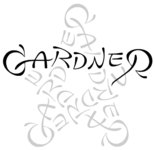
Scott Kim’s ambigram logo for G4G5

In this video you can hear Scott Kim (remember his ambigrams?) talk about his own connection to Martin Gardner, and here he talks about his involvement with the Gathering 4 Gardner. These are events that take place across the world to celebrate Gardner’s work and legacy. If you’re inspired by some of this stuff, maybe you’ll get a few friends together and share it with them.

Gardner’s very first article for Scientific American was about the hexaflexagon, so as part of this year’s Gathering 4 Gardner, people are making flexagons of all sorts. Here’s a video of Martin himself talking about them, which is part of full-length video about Gardner called “The Nature of Things.” Justin wrote about flexagons here, and Vi Hart followed suit with a pair of fantastic videos telling the true story of their discovery.

And here’s part 2.

That’s not all! There’s a whole world of flexagons to build and play with. To see another kind, check out the cyclic hexa-tetraflexagon as shown off by James Grime in this video.
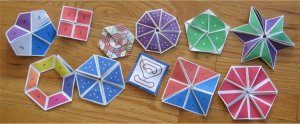
A Flexagon Bestiary

Here’s one last flexagon resource with instructions you might prefer.  There are so many videos to watch, puzzles to solve, and flexagons to flex. Hopefully you’ll have a very mathy week in honor of Martin Gardner.

Bon appetit!

Stand-Up, Relatively Prime, and Aliens?

Welcome to this week’s Math Munch!

As you may have noticed, we here at Math Munch are all about good math videos.  Well, with Matt Parker’s math stand-up comedy YouTube channel, we feel like we’ve hit the jackpot!

Yes, you read it right – Matt is a math stand-up comedian.  Matt does stand-up comedy routines about mathematics at schools and math conferences in the United Kingdom.  In fact, he and several other mathematicians and teachers have started an organization called Think Maths that sends funny and entertaining mathematicians to schools to get kids more excited about math.  He also does podcasts  and is writing a book!  Cool!

Here are two of my favorite videos from Matt’s channel.  The first is a problem involving a sleeping princess and a sneaky prince.  I haven’t solved the problem yet – so, if you do, don’t give away the answer!

[youtube http://www.youtube.com/watch?v=nv0Onj3wXCE&feature=plcp]

In the second, Matt shows you how to look like you know how to solve a Rubik’s cube and impress your friends.  And it teaches you some interesting facts about Rubik’s cubes at the same time.

[youtube http://www.youtube.com/watch?v=aPD_OkjnCqU&feature=plcp]

We’ve dug deep into the world of cool, mathy videos – but how about cool, mathy radio?  Personally, I love radio.  And I love math – so what could be better than a radio podcast about math?

Check out this new series of podcasts about mathematics by Samuel Hansen.  It’s called Relatively Prime.  The first episode has just been released!  It’s about the fascinating (and a little scary) topic of the three mathematical tools that you’ll need to survive, in Samuel’s words, “the coming apocalypse.”  And what are these tools?  Game theory, the mathematics of risk, and geometric reasoning.  How will these mathematical ideas help you?  Well, listen to the podcast and find out!  The podcast features interviews with many mathematicians, including Edmund Harris (who we wrote about in April) and Matt Parker.

I especially like this podcast because it gives some good answers to the question, “What can mathematics be used for?”  Even though I love doing math just for fun, I sometimes wonder how math can be used in other subjects and problems I might face in my life outside of math.  If you wonder this sometimes, too, you might like listening to this podcast.

We had the opportunity to interview Samuel about mathematics and the making of Relatively Prime.  Check out the interview on the Q&A page.

Finally, talking about the apocalypse (and the uses of math) makes me think about alien encounters.  What are the chances that there’s an intelligent alien civilization out there?  There are a lot of factors that go into answering this question – such as, what are the chances that a planet will develop life?  The evaluation of these chances is largely a matter of science, as is actually contacting aliens.  But math can be used to come up with a formula that tells us how likely it is that we’ll encounter aliens, given the other chances and how they relate to each other.

The equation that models this is called the Drake Equation.  It was developed in 1961 by a scientist named Dr. Frank Drake and has been used by scientists ever since to calculate the chances that there are intelligent aliens for us to talk to.  The equation is particularly interesting because small changes in, say, the number of stars that have planets, can drastically change the chance that we’ll encounter aliens.

Want to play with this equation?  Check out this awesome infographic about the Drake Equation from the BBC.  You can decide for yourself the chances that a planet will develop life and the number of years we’ll be sending messages to aliens or use numbers that scientists think might be accurate.

Bon appetit!  And watch out for aliens.  If my calculations are correct, there are a lot of them out there.

Fractions, Sam Loyd, and a MArTH Journal

Welcome to this week’s Math Munch!

Check out this awesome graph:

What is it?  It’s a graph of the Farey Fractions, with the denominator of the (simplified) fraction on the vertical axis and the value of the fraction on the horizontal axis, made by mathematician and professor at Wheelock College Debra K. Borkovitz (previously).  Now, I’d never heard of Farey Fractions before I saw this image – but the graph was so cool that I wanted to learn all about them!

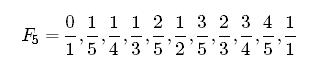
So, what are Farey Fractions, you ask?  Debra writes all about them and the cool visual patterns they make in this post.  To make a list of Farey Fractions you first pick a number – say, 5.  Then, you list all of the fractions between 0 and 1 whose denominators are less than or equal to the number you picked.  So, as Debra writes in her post, for 5 the list of Farey Fractions is:

As Debra writes, there are so many interesting patterns in Farey Fractions – many of which become much easier to see (literally) when you make a visualization of them.  Debra has made several awesome applets using the program GeoGebra, which she links to in her post.  (You can download GeoGebra and make applets of your own by visiting our Free Math Software page.)  These applets really show the power of using graphs and pictures to learn more about numbers.  To play with the applet that made the picture above, click here.  Check out her post to play with another applet, and to read more about the interesting patterns in Farey Fractions.

Next, check out this website devoted to the puzzles of puzzlemaster Sam Loyd.  Sam Loyd was a competitive chess player and professional puzzle-writer who lived at the end of the nineteenth century.  He wrote many puzzles that are still famous today – like the baffling Get Off the Earth puzzle.  Click the link to play an interactive version of the Get Off the Earth puzzle.

The site has links to numerous Sam Loyd puzzles.  Check out the Picture Puzzles, in which you have to figure out what object is described by the picture, or the Puzzleland Puzzles, which feature characters from the fictional place Puzzleland that Sam created.

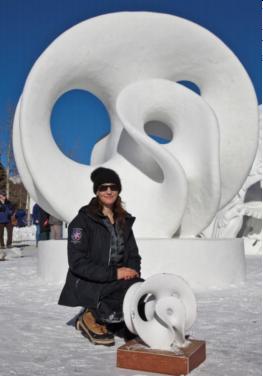
Snow MArTH, made by MArTHist Eva Hild and others at a snow sculpture event in Colorado. From the Spring, 2011 Hyperseeing.

Finally, take a look at some of the beautiful pictures and fascinating articles in this journal about mathematical art (a.k.a., MArTH) called Hyperseeing.  Hyperseeing is edited by mathematicians and artists Nat Friedman and Ergun Akleman.  Hyperseeing is published by the International Society of the Arts, Mathematics, and Architecture, which Nat founded to encourage education connecting the arts, architecture, and math – which we here at Math Munch love!  In one of his articles, Nat defines hyperseeing as, “Interdisciplinary education… concerned with seeing from multiple viewpoints in a very general sense.  Hyperseeing is a more complete way of seeing.”

There are so many beautiful images to look at and interesting articles to read in Hyperseeing.  Among other things, each edition of Hyperseeing features a mathematical comic by Ergun.  Here are some of my favorite Hyperseeings from the archives:

This edition of Hyperseeing features art made from Latin Squares and “organic geometry” art, among many other things.

This edition of Hyperseeing features crocheted hyperbolic surfaces (which we featured not long ago in this Math Munch!) and sculptures made with a 3-D printer, among many other things.

This is the first edition of Hyperseeing. In it, Nat describes the mission of Hyperseeing and the International Society of the Arts, Mathematics, and Architecture.

Bon appetit!

P.S. – You may have noticed a new thing to click off to the right, below the Favorite Munches.  This is our For Teachers section.  The Math Munch team has put together several pages to describe how we use Math Munch in our classes and give suggestions for how you might use it, too.  Teachers and non-teachers alike may want to check out our new Why Math Munch? page, which gives our mission statement.

P.P.S. – The Math Munch team is going to Bridges on Thursday!  Maybe we’ll see you there.