Category Archives: Math Munch

Knots, Torus Games, and Bagels

Welcome to this week’s Math Munch!

The things we have lined up for you this week have to do with a part of math called topology.  Topology is like geometry in many ways, except the shapes you study aren’t rigid.  Instead, you can twist, stretch, squish, and generally deform them in any way you like, so long as you don’t rip any holes or attach things that weren’t already attached.  One of the reasons why topology is interesting is that you get to play with new and fascinating shapes, like…

… knots!  This nifty site, Knot Theory Online, is full of interesting information about the study of mathematical knots and its history and applications.  For some basic information, check out the introduction to knots page.  It talks about what a knot is, mathematically speaking, and some ways that mathematicians answer the most important question in knot theory: is this knot the unknot?  The site also has some fun games in which you can play with transforming one knot into another.  Here’s my favorite: The Hunt for the Elusive Trefoil Knot.

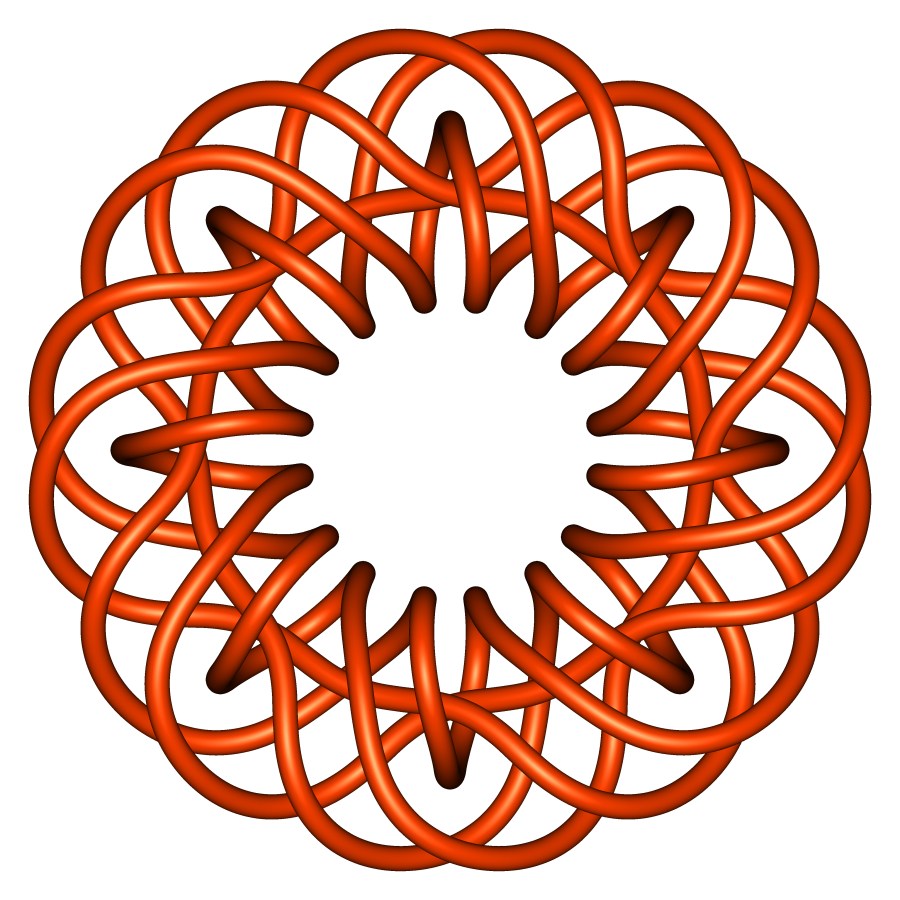
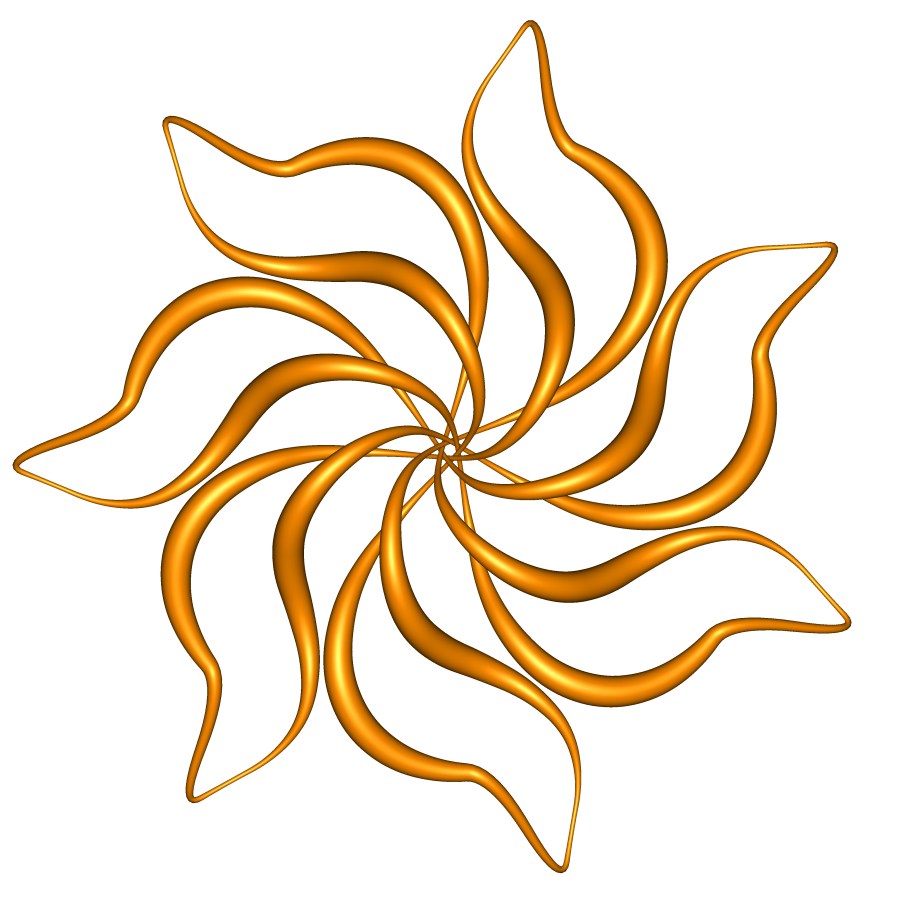
Knots can also be works of art – and this site, Knot Plot, showcases artistic knots at their best.  Here are some images of beautiful decorative knots.

A really cool thing about knot theory is that it is a relatively new area of mathematical research – which means that there are many unsolved knot theory problems that a person without a lot of math training could attempt!  Here’s a page of “approachable open problems in knot theory,” compiled by knot theorist and Williams College professor Colin Adams.

One of a topologist’s favorite objects to study is one that you might encounter at breakfast – the torus, or donut (or bagel).  To get a sense for what makes a torus topologically interesting and for what life might be like if you lived on a torus (instead of a sphere, a topologically different surface), check out Torus Games.  Torus Games was created by mathematician Jeff Weeks.  You can play games that you’d typically play on a plane, in flat space – such as Tic-Tac-Toe, chess, and pool – but on a torus (or a Klein bottle) instead!

A maze – on a torus!

By the way, you can find Torus Games and other cool, free, downloadable math software on our new page – Free Math Software.  You’ll find links to other software that we love to use – such as Scratch and GeoGebra, and another program by Jeff Weeks called Curved Spaces.

All this talk of tori making you hungry?  Go get your own tasty torus (bagel), and try this fun trick to slice your bagel into two linked halves.  This topologically delicious breakfast problem was created by mathematical artist George Hart.

Bon appetit!  (Literally, this time.)
The Fractal Foundation, Schoolhouse Rock, and More

Welcome to this week’s Math Munch!

Triangle Cutout Fractal

Up first, check out the Fractal Foundation.  They’re mission is simple: “We use the beauty of fractals to inspire interest in Science, Math and Art.”  If you played around with recursive drawing a few weeks ago, then perhaps you were as inspired by fractals as they hope you’ll be.  If you’re not really sure what fractals actually are, here’s a great one-page explanation from the Fractal Foundation website.  They also have an excellent page of “fractivities,” including instructions for the beautiful paper cutout fractal pictured on the right.  If you want to have your mind blow, check out their fantastic page of fractal videos.  Just amazing.


Next up, have you ever heard of Schoolhouse Rock?  It’s a series of rocking animated music videos that originally ran on TV from 1973 to 1985.  Vintage math goodness!  They cover all kinds of educational stuff like grammar and history, but I totally love the math videos, and a few of them are on YouTube!  Down below you can watch two of my favorites, and you can find the others here.  if you poke around YouTube, you could probably find a few more as well.


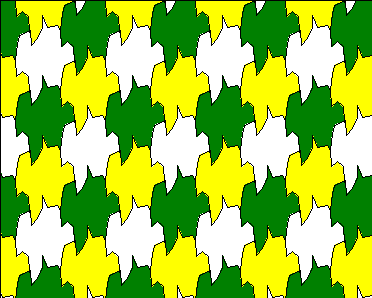
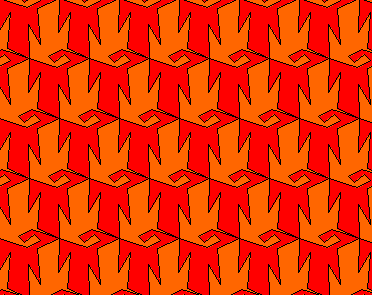
Finally, a few additions to our resource pages.  For the Math Games page, we’re adding Linebounder.  You and the computer battle to draw a line towards your goal.  I had a really hard time with this at first, but there are certain strategies that the computer simply cannot beat.  You just have to find them.  Also new is Shift, another fun game that plays with the relationship between figure and ground.  For the new Math Art Tools page, we’re adding Tessellate!  It’s an interactive applet that lets you make custom tiles to cover the plane.  Here’s a few examples I just made.


Bon appetit!

Hexagonal

Triangular

Rectangular

Slides and Twists, Life in Life, and Star Art

Welcome to this week’s Math Munch!

I ran across the most wonderful compendium of slidey and twisty puzzles this past week when sharing the famous 15-puzzle with one of my classes.  It’s called Jaap’s Puzzle Page and it’s run by a software engineer from the Netherlands named Jaap Scherphuis. Jaap has been running his Puzzle Page since 1999.


Jaap Scherphuis
and some of his many puzzles

Jaap first encountered hands-on mathematical puzzles when he was given a Rubik’s Cube as a present when he was 8 or 9. He now owns over 700 different puzzles!

Jaap’s catalogue of slidey and twisty puzzles is immense and diverse. Each puzzle is accompanied by a picture, a description, a mathematical analysis, and–SPOILER ALERT–an algorithm that you can use to solve it!

On top of this, all of the puzzles in Jaap’s list with asterisks (*) next to them have playable Java applets on their pages–for instance, you can play Rotascope or Diamond 8-Ball. Something that’s especially neat about Jaap’s applets is that you can sometimes customize their size/difficulty. If you find the 15-puzzle daunting, you can start with the 8-puzzle or even the 3-puzzle instead. The applets also have a built in solver. I really enjoy watching the solver crank through solving a puzzle–it’s so relentless, and sometimes you can see patterns emerge.

Over ten solves, I found that the autosolve for the 15-puzzle averaged 7.1 seconds. How long do you think on average the 63-puzzle would take to solve?

You can read more about Jaap in this interview on speedcubing.com or on his about page.

puzzle

The 15-puzzle

Rotascope

Diamond 8-ball

Next, I recently read about an amazing feat: Brice Due created a copy of Conway’s Game of Life inside of a Game of Life! This video shows you what it’s all about. It starts zoomed in on some activity, following the rules of Life. The it zooms out to show that this activity conspires to make a large unit cell that is “turned on.” This large cell was dubbed a “OTCA metapixel” by its creator, where OTCA stands for Outer Totalistic Cellular Automata.

Finally, the video zooms out even more to show that this cell and others around it interact according to the rules of Life! The activity at the meta-level that is shown at the end exactly corresponds to the activity on the micro-level that we began with.  Check it out!

This metapixel idea has been around since 2006, but the video was created just recently by Philip Bradbury. It was made using Golly, a cellular automata explorer that is one of my favorite mathematical tools.

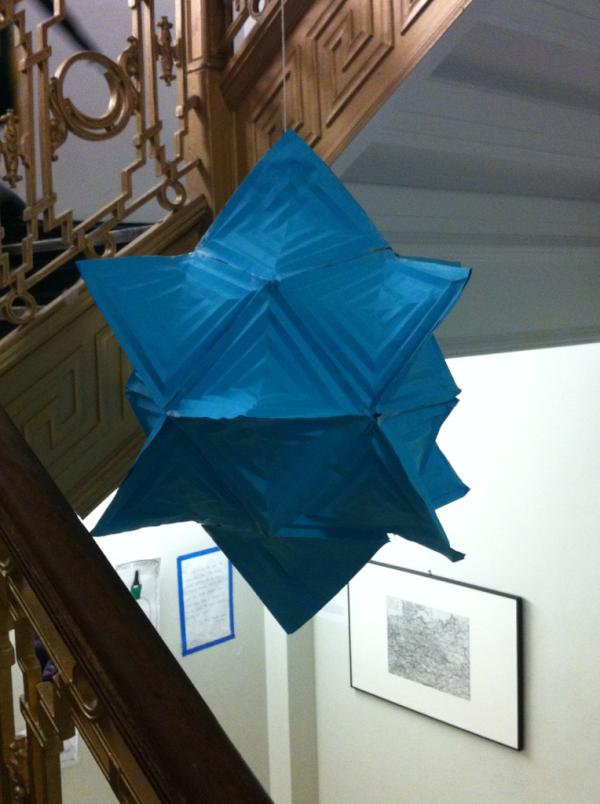
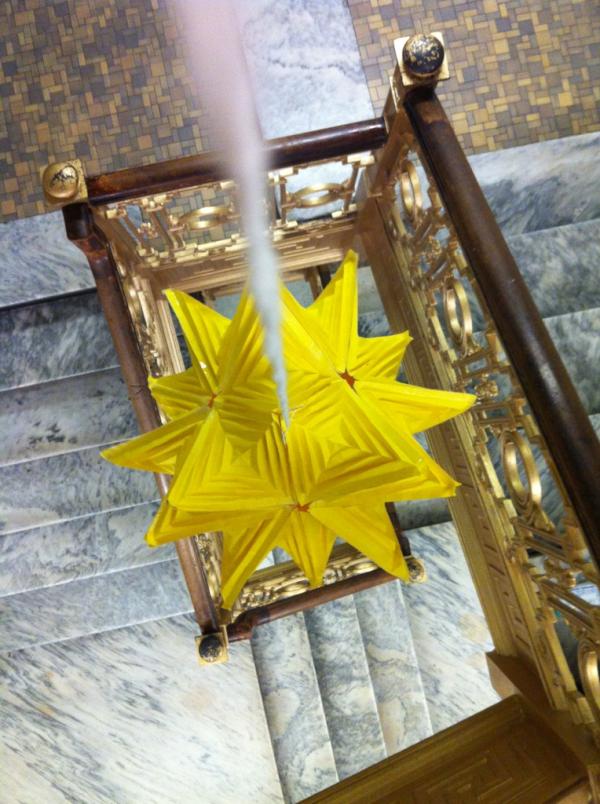
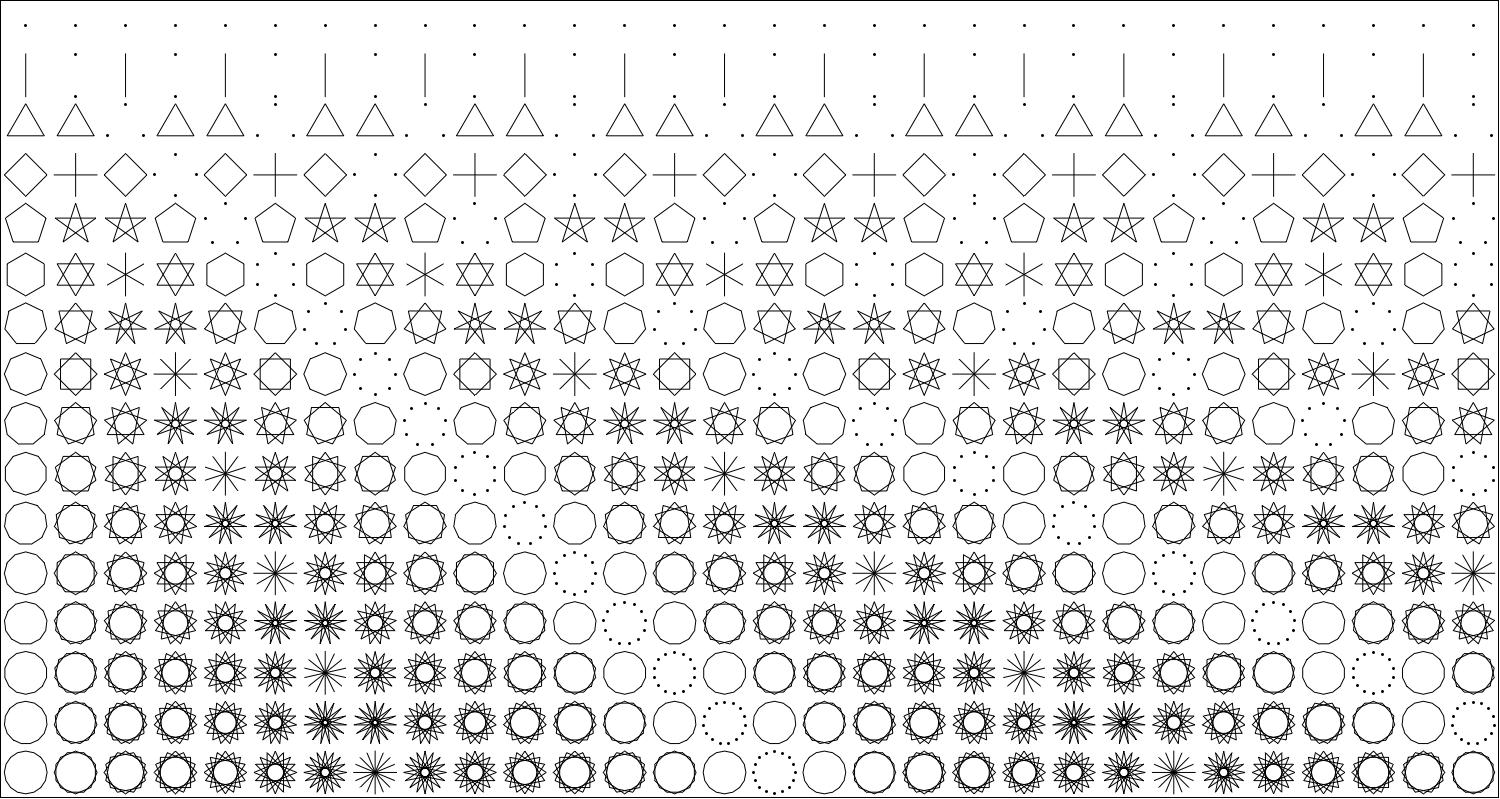
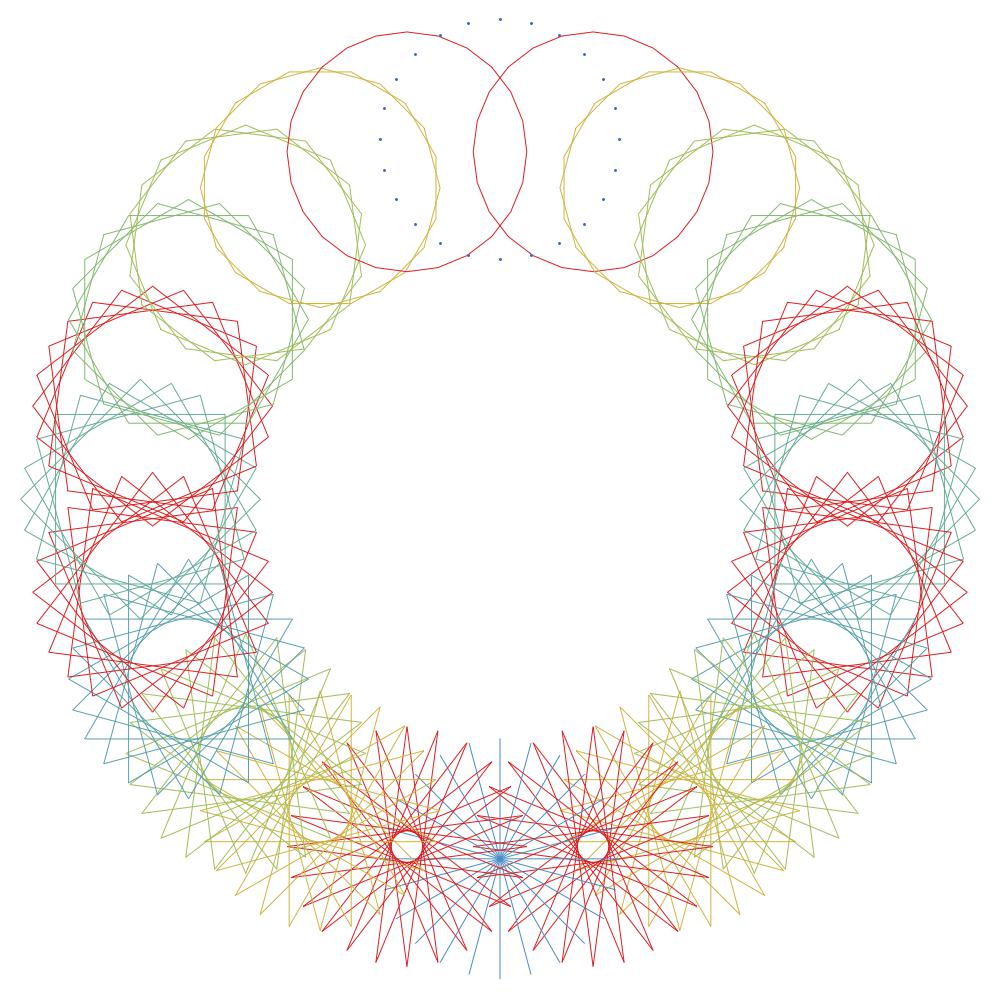
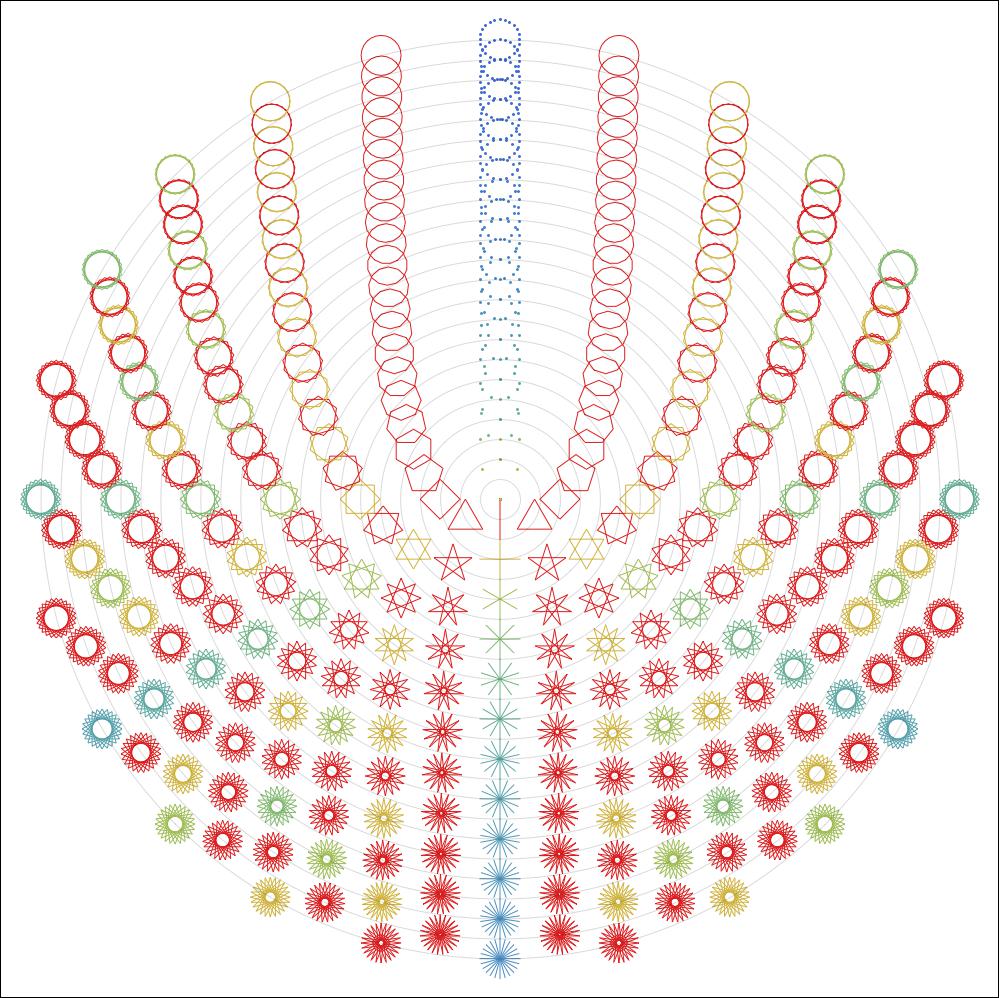
Last up, some star art! (STart? STARt? st-art?)  It turns out that the Math Munch team members all converged toward doing some StArT this semester as a part of our mathematical art (MArTH) seminar. Here is some of our work, for your viewing pleasure. Bon appetit!

by Anna Weltman

by Anna Weltman

Stars of the Mind’s Sky
by Paul Salomon

Star Ring 24
by Paul Salomon

300 Stars in Orbit
by Paul Salomon

by Justin Lanier