Tag Archives: doodling

Squiggles, Spheres, and Taxes

Welcome to this week’s Math Munch!

Check out this cool doodle animation from the blog of Matt Henderson. Matt studied math at Cambridge as an undergrad and now does research on speech and language technology. His idea for a doodle was to start with an equilateral triangle and then encircle it with squiggles until it eventually turned into a square.

Matt Henderson

Matt Henderson

Matt’s triangle-to-square squiggle

Matt has all kinds of beautiful and intricate mathematical images on his blog, many of them animated using computer code. He made a similar squiggle-doodle that evolves a straight line into a profile of his face; an animation of rolling a ball on a merry-go-round; a million dot generator; and many more!

Along the same “lines” as Matt’s squiggle, Ted Theodosopoulos wrote an article in Peer Points reviewing a research paper by Stanford mathematician Ravi Vakil. The title of Ravi’s paper is “The Mathematics of Doodling.”
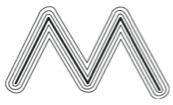
Ravi’s doodle

Next up, check out this cool visualization of a sphere.

The title of the video is Spherikal and was created by Ion Lucin, a graphic artist in Spain.

Something neat comes out about Ion’s attitude toward learning and sharing in a comment he makes:

“Thanks for appreciating my work. I was thinking the same, not to reveal my secrets, but then, i to learned from the videos and tutorials of others, i have been working with 3D for a year and a half, and all i know about it i learned it by myself, by seeing tutorials, im from fine arts. In a way a feel i must share , like other did and helped me”

What a great attitude!

Another spherical idea comes from a post on one of my favorite websites: MathOverflow, a question-and-answer site for research-level mathematicians…and anyone else! The question I have in mind was posted by Joe O’Rourke, a mathematician at Smith College and one of my favorite posters on MathOverflow. It’s about a certain kind of random walk on a sphere. Check it out!

For this step distance, it looks like a random walk will fill up the whole sphere. What about other step distances?

Again, such a cool picture is created by translating a mathematical scenario into some computer code!

Since this week is when federal income taxes are due, I’ll leave you with a few links about taxes and the federal budget. First, here’s the IRS’s website for kids. (Yes, for real.)

Next, this infographic lets you examine how President Obama’s 2011 budget proposal divvied up funds to all of the different departments and projects of the federal government. Can you find NASA’s budget?

2011budget

On a more personal scale, this applet called “Where did my tax dollars go?” does just that—when you give it a yearly personal income, it will calculate how much of it will go toward different ends.

Finally, this applet lets you tinker with the existing tax brackets and see the effect on total revenue generated for the federal government. Can you find a flat tax rate that would keep total tax revenue the same?

Whew! That was a lot; I hope you didn’t find it too taxing. Bon appetit!
Noodles, Flowsnake, and Symmetry

Welcome to this week’s Math Munch!

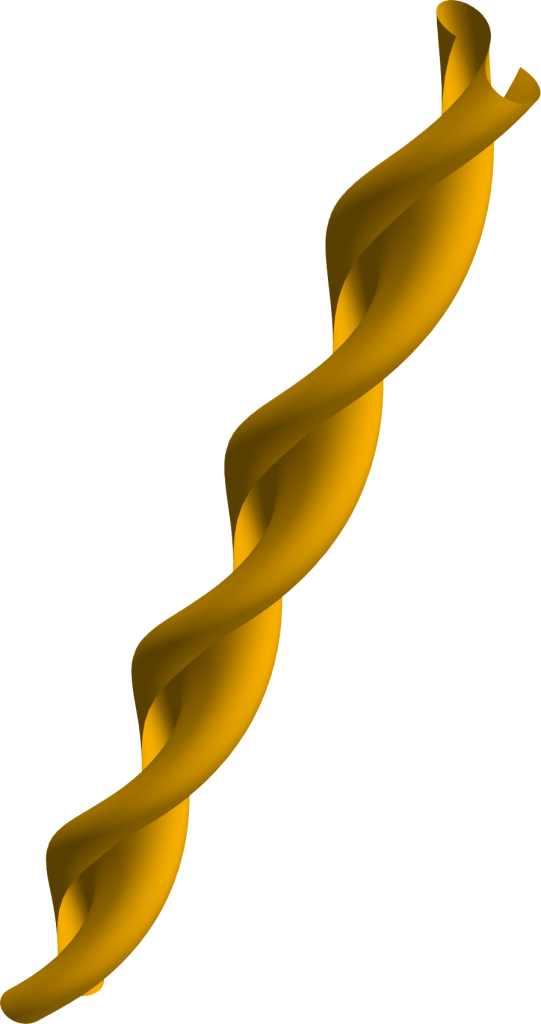
Gemelli, by Sander Huisman

Gemelli, by Sander Huisman

How much do you like pasta?  Well, these mathematicians and scientists from around the world like pasta so much that they’ve been studying its shape mathematically!  Check out this New York Times article about Sander Huisman, a graduate student in physics from the Netherlands, and Marco Guarnieri and George L. Legendre, two architects from London, who have all taken up making graphs of and equations for pasta shapes.  Sander posts his pasta-graphs on his blog.  Legendre wrote this book about math and pasta, called Pasta By Design.  Legendre has even invented a new type of pasta, shaped like a Mobius strip (see last week’s Math Munch for lots of cool things with Mobius strips), which he named after his baby daughter, Ioli!

Some of Legendre’s pasta plots

Next, here comes the flowsnake.  Wait – don’t run away!  The flowsnake is not a terrifying monster, despite it’s ominous name.  It is a space-filing curve, meaning that the complete curve covers every single point in a part of two-dimensional space.  So if you were to try to draw a flowsnake on a piece of paper, you wouldn’t be able to see any white when you were done.  It’s named flowsnake because it resembles a snowflake.

The flowsnake curve

A single piece of the flowsnake curve.

Units of flowsnake fit together like puzzle pieces to fill the plane

Finally, check out this awesome online symmetry-sketcher, called Symmetry Artist!  Here, you can make doodles of all kinds and then choose how you want to reflect and rotate them.  Fun!

Bon appetit!

Triangles, Triangles, Triangles!

Welcome to this week’s Math Munch!

Inspired by Vi Hart’s most recent doodling video “Triangle Party!”, this week’s post is all about triangles.

Connie Liu

One of the most amazing things about mathematics is that there are always new discoveries to be made about even the simplest of objects–even triangles!  Check out this article about Connie Liu, a Hawaiian teenager who just last year discovered some new formulas that relate special points of triangles to each other.  Connie has found some new, simple, and interesting ways of describing the triangle inequality – just by sticking with her questions and digging into a particular part of mathematics a little deeper than anyone had before.

Next up, here are some visual perspectives on Pascal’s triangle.  Even folks who are well acquainted with this numerical cascade are likely to find something new to see in these blog posts by Tao Wang.  Tao is a math and computer teacher in NYC.  My favorite visualization is the video that depicts the entries of Pascal’s triangle as blocks that are as tall as their numerical value.

Hat tip to Patrick Honner, a math teacher from Brooklyn, for the Pascal’s triangle visualizations.  Patrick writes a sweet mathematical blog, including a running series of photographs about the math that he sees in the world.  Check out his posts about which of these isosceles triangles is “more equilateral.”

Zooming in on the corner of a Koch snowflake.

Finally, Vi mentions and doodles a Koch snowflake in her video.  This seems timely, what with snowfalls likely just around the corner.  Here are some great images of generalizations of the Koch snowflake by Phil Keenan that he made using computers.

Wow, what a great crop of other blogs for you to explore!

Here is a list of them all:

Math Laoshi by Tao Wang

Math Appreciation by Patrick Honner

Meandering Through Mathematics by Phil Keenan

and of course Vi Hart’s Blog

Stay tuned for more winter-inspired mathematics next week!

Bon appetit!