Tag Archives: games

Nice Neighbors, Spinning GIFs, and Breakfast

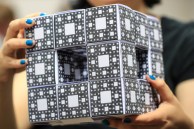
A minimenger.

A minimenger.

Welcome to this week’s Math Munch!

Math projects are exciting—especially when a whole bunch of people work together. One example of big-time collaboration is the GIMPS project, where anyone can use their computer to help find the next large prime number. Another is the recent MegaMenger project, where people from all over the world helped to build a giant 3D fractal.

But what if I told you that you can join up with others on the internet to discover some brand-new math by playing a webgame?

Chris Staecker is a math professor at Fairfield University. This past summer he led a small group of students in a research project. Research Experiences for Undergraduates—or REUs, as they’re called—are summer opportunities for college students to be mentored by professors. Together they work to figure out some brand-new math.
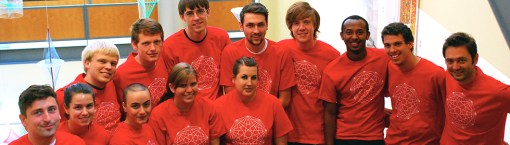
The crew from last summer's REU at Fairfield. Chris is furthest in the back.
The crew from last summer’s REU at Fairfield. Chris is furthest in the back.

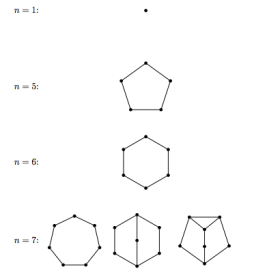
The irreducible digital images containing 1, 5, 6, and 7 points.

The irreducible digital images containing 1, 5, 6, and 7 “chunks”.

Chris and his students Jason Haarmann, Meg Murphy, and Casey Peters worked on a topic in graph theory called “digital images”. Computer images are made of discrete chunks, but we often want to make them smaller—like with pixel art. So how can we make sure that we can make them smaller without losing too much information? That’s an important problem.

Now, the pixels on a computer screen are in a nice grid, but we could also wonder about the same question on an arbitrary connected network—and that’s what Chris, Jason, Meg, and Casey did. Some networks can be made smaller through one-step “neighbor” moves while still preserving the correct connection properties. Others can’t. By the end of the summer, the team had come up with enough results about digital images with up to eight chunks to write about them in a paper.

To help push their research further, Chris has made a webgame that takes larger networks and offers them as puzzles to solve. Here’s how I solved one of them:
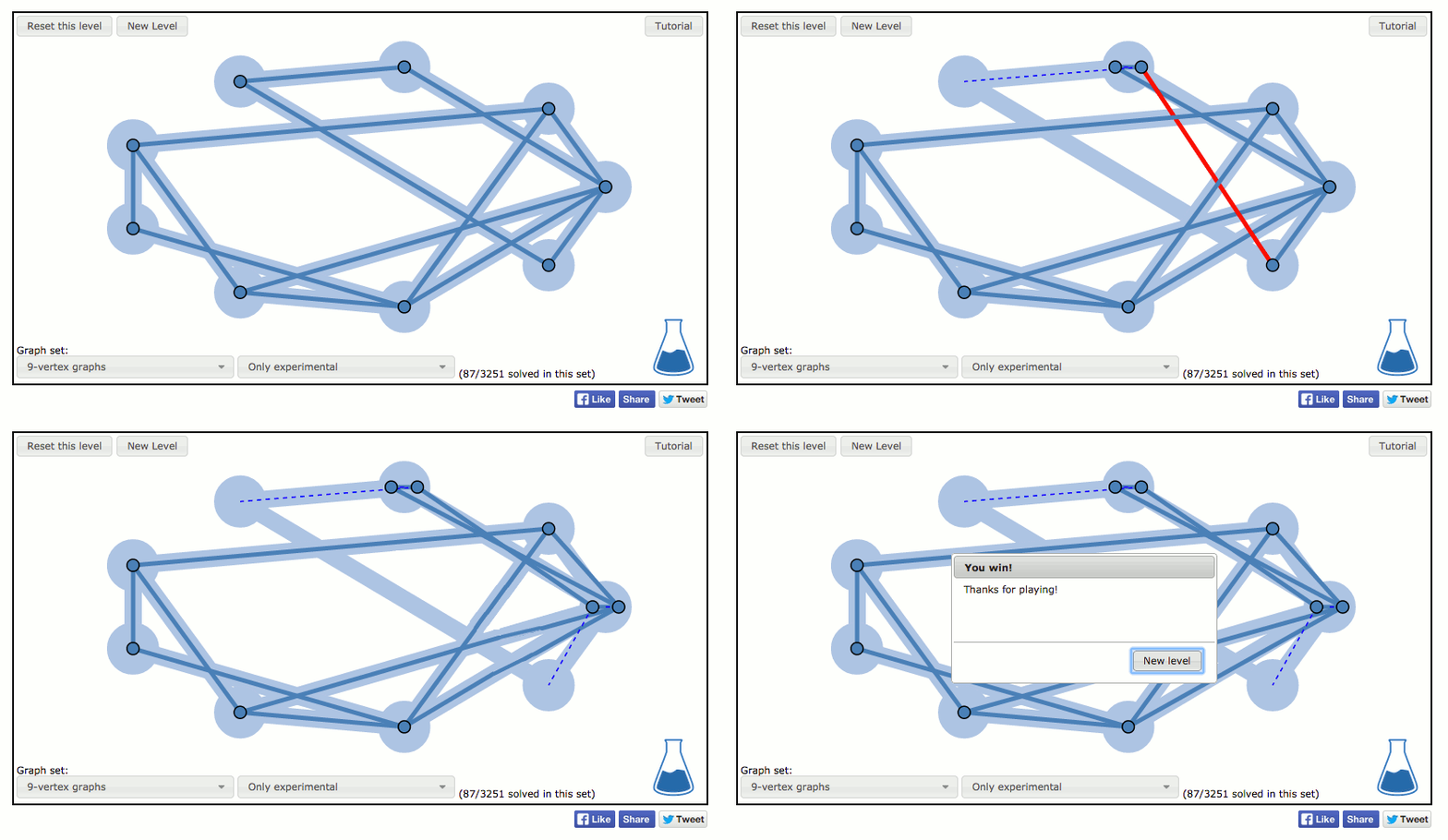
NiceNeighbors

See how the graph “retracts” onto itself, just by moving some of the nodes on top of their neighbors? That’s the goal. And there are lots of puzzles to work on. For many of them, if you solve them, you’ll be the first person ever to do so! Mathematical breakthrough! Your result will be saved, the number at the bottom of the screen will go up by one, and Chris and his students will be one step closer to classifying unshrinkable digital images.

Starting with the tutorial for Nice Neighbors is a good idea. Then you can try out the unsolved experimental puzzles. If you find success, please let us know about in the comments!

Do you have a question for Chris and his students? Then send it to us and we’ll try to include it in our upcoming Q&A with them.


Next up: you probably know by now that at Math Munch, we just can’t get enough of great mathy gifs. Well, Sumit Sijher has us covered this week, with his Tumblr called archery.

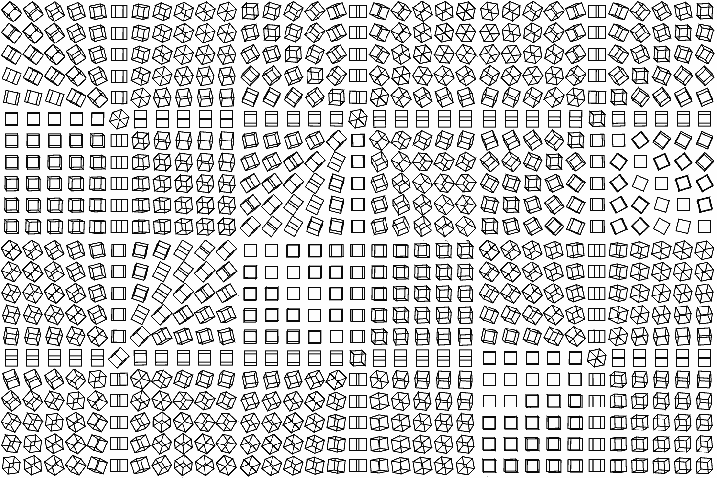
Here are four of Sumit’s gifs. There are plenty more where these came from. This is a nice foursome, though, because they all spin. Click to see the images full-sized!
tumblr_mdv99p6WcP1qfjvexo1_500

How many different kinds of cubes can you spot?

This one reminds me of the Whitney Music Box.

This one reminds me of the
Whitney Music Box.

Whoa.

Clockwise or counterclockwise?

Clockwise or counterclockwise?

I really appreciate how Sumit also shares the computer code that he uses to make each image. It gives a whole new meaning to “show your work”!

Through Sumit’s work I discovered that WolframAlpha—an online calculator that is way more than a calculator—has a Tumblr, too. By browsing it you can find some groovy curves and crazy estimations. Sumit won an honorable mention in Wolfram’s One-Liner Competition back in 2012. You can see his entry in this video.

And now for the most important meal of the day: breakfast. Mathematicians eat breakfast, just like everyone else. What do mathematicians eat for breakfast? Just about any kind of breakfast you might name. For some audio-visual evidence, here’s a collection of sound checks by Numberphile.
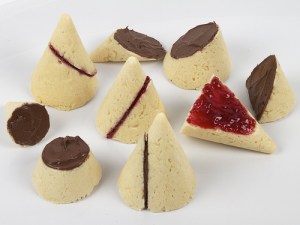
Sconic sections. Yum!

Sconic sections. Yum!

If that has you hungry for a mathematical breakfast, you might enjoy munching on some sconic sectionsa linked-to-itself bagel, or some spirograph pancakes.

Bon appetit!
Spheres, Gears, and Souvenirs

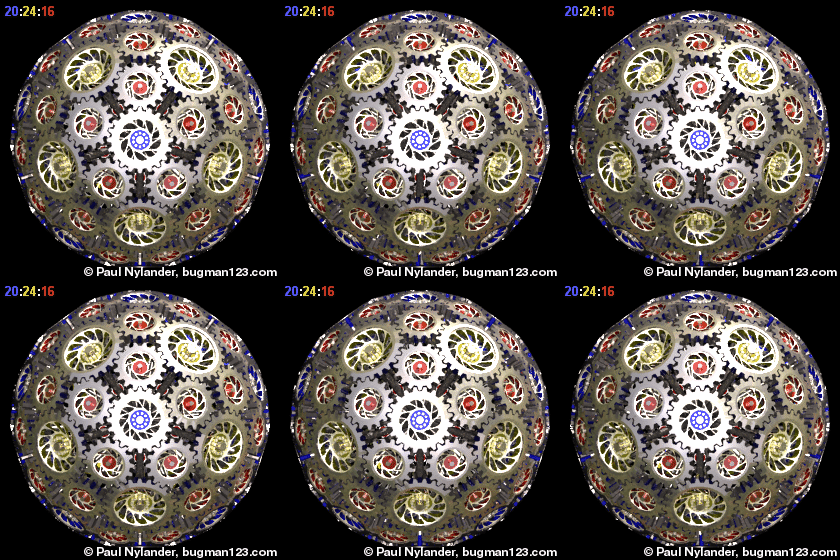
92GearSphere-20-24-16Welcome to this week’s Math Munch!

Whoa. What is that?

Is that even possible?

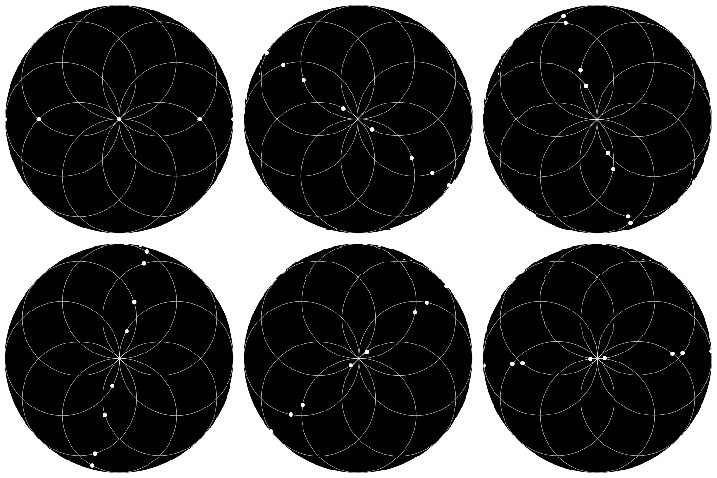
This gear sphere and many others are the creations of Paul Nylander. There are 92 gears in this gear sphere. Can you figure out how many there are of each color? Do you notice any familiar shapes in the gears’ layout?

What’s especially neat are the sizes of the gears—how many teeth each gear color has. You can see the ratios in the upper left corner. Paul describes some of the steps he took to find gears sizes that would work together. He wrote a computer program to do some searching. Then he did some precise calculating and some trial and error. And finally he made some choices about which possibilities he liked best. Sounds like doing math to me!

Along the way Paul figured out that the blue gears must have a number of teeth that is a multiple of five, while the yellow ones must have a multiple of three. I think that makes sense, looking at the number of red gears around each one. So much swirly symmetry!

Spiral shadows!

Spiral shadows!

Be sure to check out some of Paul’s other math art while you’re on his site. Plus, you can read about a related gear sphere in this post by mathematician John Baez.

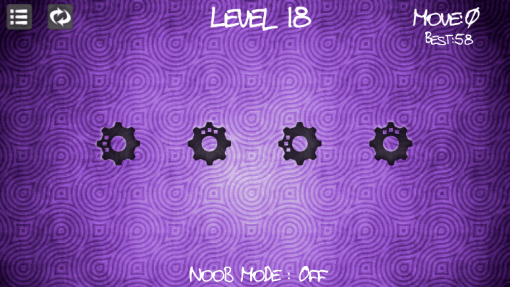
I figured there had to be a good math game that involves gears. I didn’t find quite what I expected, but I did find something I like. It’s a game that’s called—surprise, surprise—Gears! It isn’t an online game, but it’s easy to download.

Can you find the moves to make all the gears point downwards?

Can you find the moves to make all the gears point downwards?

This Wuzzit is in trouble!

Wuzzit Trouble!

And if you’re in the mood for some more gear gaming and you have access to a tablet or smartphone, you should check out Wuzzit Trouble. It’s another free download game, brought to you by “The Math Guy” Keith Devlin. Keith discusses the math ideas behind Wuzzit Trouble in this article on his blog and in this video.

Poster2

Last up this week, I’d like to share with you some souvenirs. If you went on a math vacation or a math tour, where would you go? One of the great things about math is that you can do it anywhere at all. Still, there are some mathy places in the world that would be especially neat to visit. And I don’t mean a place like the Hilbert Hotel (previously)—although you can get a t-shirt or coffee mug from there if you’d like! The mathematician David Hilbert actually spent much of his career in Göttingen, a town and university in Germany. It’s a place I’d love to visit one day. Carl Gauss lived in Göttingen, and so did Felix Klein and Emmy Noether—and lots more, too. A real math destination!

Lots of math has been inspired by or associated with particular places around the world. Just check out this fascinating list on Wikipedia.

Arctic Circle Theorem

The Arctic Circle Theorem

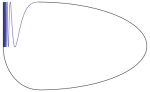
The Warsaw Circle

The Warsaw Circle

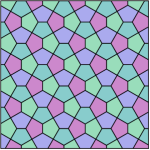
Cairo Pentagonal Tiling

The Cairo Pentagonal Tiling

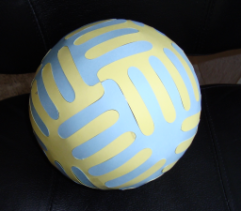
Did you know that our word souvenir comes from the French word for “memory”? One thing that I like about math is that I don’t have to memorize very much—I can just work things out! But every once in a while, there is something totally arbitrary that I just have to remember. Here’s one memory-helper that has stuck with me for a long time.

May you, like our alligator friend, find some good math to munch on. Bon appetit!

Zippergons, High Fashion, and Really Big Numbers

Welcome to this week’s Math Munch!

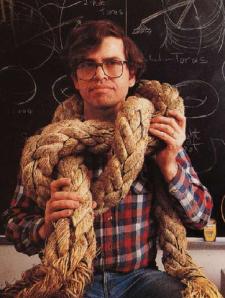
Bill Thurston

Bill Thurston

Recently I attended a conference in memory of Bill Thurston. Bill was one of the most imaginative and influential mathematicians of the second half of the twentieth century. He worked with many mathematicians on projects and had many students before he passed away in the fall of 2012 at the age of 65. You can read Bill’s obituary in the New York Times here.

Bill worked where geometry and topology meet. In fact, Bill throughout his career showed that there are rich connections between the two fields that no one thought was possible. For instance, it’s an amazing fact that every surface—no matter how bumpy or holey or twisted—can be given a nice, symmetric curvature. A uniform geometry, it’s called. This was proven by Henri Poincaré in 1907. It was thought that 3D spaces would be far too complicated to be behave according to a similar rule. But Bill had a vision and a conjecture—that every 3D space can be divided into parts that can be given uniform geometries. To give you a flavor of these ideas, here’s a video of Bill describing some unusual and fabulous 3D spaces.

Any surface can be given a nice, symmetric geometry.

Any surface can be given a uniform geometry. Even a bunny. Another video.

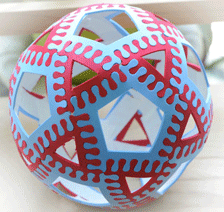
As you can probably tell, visualizing and experiencing math was very important to Bill. He even taught a course with John Conway called Geometry and the Imagination. Bill often used computers to help himself see the math he was thinking about, and he enjoyed making hands-on models as well. Beginning in spring of 2010, Bill and Kelly Delp of Ithaca College worked out an idea. Usually all of the curving or turning of a polyhedron is concentrated at the vertices. Most of a cube is flat, but there’s a whole lot of pinch at the corners. What if you could spread that pinching out along the edges? And if you could, wouldn’t longer and perhaps wiggly edges help spread it even better? Yes and yes! You can see some examples of these “zippergons” that Bill and Kelly imagined and made in this gallery and read about them in their Bridges article.

A zippergon based on an octahedron.

A paper octahedron zippergon.

Icosadodecahedron.

A foam icosadodecahedron zippergon.

One of Bill’s last collaborations happened not with a mathematician but with a fashion designer. Dai Fujiwara, a noted creator of high fashion in Tokyo, got inspired by some of Bill’s illustrations. In collaboration with Bill, Dai created eight outfits. Each one was based on one of the eight Thurston geometries. You can see the result of their work together in this video and read more about it in this article.

Isn’t it amazing how creative minds in very different fields can learn from each other and create something together?

Richard Evan Schwartz (self-portrait)

Richard Evan Schwartz (self-portrait)

Richard Evan Schwartz was one of the speakers at the conference honoring Bill. Rich studied with Bill at Princeton and now is a math professor at Brown University.

Like Bill, Rich’s work can be highly visual and playful, and he often taps the power of computers to visualize and analyze mathematical structures. There’s lots to explore on Rich’s website. Check out these applets he has made, including ones on Poncelet’s Porism, the Euclidean algorithm (previously), and a game called Lucy & Lily (JAVA required). I love how Rich shares some of his earliest applet-making efforts, like Click On A Triangle To Change Its Color. It’s motivating to see that even an accomplished mathematician like Rich began with the basics of programming—a place where any of us can start!

Screen Shot 2014-07-23 at 2.54.37 AMOn Rich’s site you’ll also find information about his project “Counting on Monsters“. And you should definitely make time to read some of the conversations that Rich has had with his five-year-old daughter Lucy.

Recently Rich published a wonderful new book for kids called “Really Big Numbers“. It is a colorful romp through larger and larger numbers and layers of abstraction, with evocative images to light the way. Check out the trailer for “Really Big Numbers” below!

Do you have a question for Rich—about his book, or about the math that he does, or about his life, or about Bill? Then send it to us in the form below and we’ll try to include it in our interview with him!

EDIT: Thanks for all your questions! Our Q&A with Rich will be posted soon.

Diana and Rich

Diana and Rich

Diana and Bill

Diana and Bill

Bill taught Rich, and Rich in turn taught Diana Davis, whose Dance Your PhD video we featured a while back. In fact, Bill’s influence on mathematics can be seen throughout many of our posts on Math Munch. Bill collaborated with Daina Taimina on hyperbolic crochet projects. He taught Jeff Weeks and helped inspire the games and software Jeff created. Bill oversaw the production of the film Outside In about the eversion of a sphere. He even coined the mathematical term “pair of pants.”

Bill’s vision of mathematics will live on in many people. That could include you, if you’d like. It’s just as Bill wrote:

In short, mathematics only exists in a living community of mathematicians that spreads understanding and breaths life into ideas both old and new.

Bon appetit!