Tag Archives: numbers

Coasts, Clueless Puzzles, and Beach Math Art

summerAh, summertime. If it’s as hot where you are as it is here in New York, I bet this beach looks great to you, too. A huge expanse of beach all to myself sounds wonderful… And that makes me wonder – how much coastline is there in the whole world?

Interestingly, the length of the world’s coastline is very much up for debate. Just check out this Wikipedia page on coastlines, and you’ll notice that while the CIA calculates the total coastline of the world to be 356,000 kilometers, the World Resources Institute measures it to be 1,634,701! What???

Measuring the length of a coastline isn’t as simple as it might seem, because of something called the Coastline Paradox. This paradox states that as the ruler you use to measure a coastline gets shorter, the length of the coastline gets longer – so that if you used very, very tiny ruler, a coastline could be infinitely long! This excellent video by Veritasium explains the problem very well:

2000px-KochFlakeAs Vertitasium says, many coastlines are fractals, like the Koch snowflake shown at left – never-ending, infinitely complex patterns that are created by repeating a simple process over and over again. In this case, that simple process is the waves crashing against the shore and wearing away the sand and rock. If coastlines can be infinitely long when you measure them with the tiniest of rulers, how to geographers measure coastline? By choosing a unit of measurement, making some approximations, and deciding what is worth ignoring! And, sometimes, agreeing to disagree.

Need something to read at the beach, and maybe something puzzle-y to ponder? Check out this interesting article by four mathematicians and computer scientists, including James Henle, a professor in Massachusetts. They’ve invented a Sudoku-like puzzle they call a “Clueless Puzzle,” because, unlike Sudoku, their puzzle never gives any number clues.

Clueless puzzleHow does this work? These puzzles use shapes instead of numbers to provide clues. Here’s an example from the paper: Place the numbers 1 through 6 in the cells of the figure at right so that no digit appears more than once in a row or column AND so that the numbers in each region add to the same sum. The paper not only walks you through the solution to this problem, but also talks about how the mathematicians came up with the idea for the puzzles and studied them mathematically. It’s very interesting – I recommend you read it!

Finally, if you’re not much of a beach reader, maybe you’d like to make some geometrically-inspired beach art! Check out this land art by artist Andy Goldsworthy:

Andy Goldsworthy 1
Andy Goldsworthy 2

Or make one of these!

Happy summer, and bon appetit!

Prime Gaps, Mad Maths, and Castles

Welcome to this week’s Math Munch!

It has been a thrilling last month in the world of mathematics. Several new proofs about number patterns have been announced. Just to get a flavor for what it’s all about, here are some examples.

I can make 15 by adding together three prime numbers: 3+5+7. I can do this with 49, too: 7+11+31. Can all odd numbers be written as three prime numbers added together? The Weak Goldbach Conjecture says that they can, as long as they’re bigger than five. (video)

11 and 13 are primes that are only two apart. So are 107 and 109. Can we find infinitely many such prime pairs? That’s called the Twin Prime Conjecture. And if we can’t, are there infinitely many prime pairs that are at most, say, 100 apart? (video, with a song!)

Harald Helfgott

Harald Helfgott

Yitang "Tom" Zhang

Yitang “Tom” Zhang

People have been wondering about these questions for hundreds of years. Last month, Harald Helfgott showed that the Weak Goldbach Conjecture is true! And Yitang “Tom” Zhang showed that there are infinitely many prime pairs that are at most 70,000,000 apart! You can find lots of details about these discoveries and links to even more in this roundup by Evelyn Lamb.

What’s been particularly fabulous about Tom’s result about gaps between primes is that other mathematicians have started to work together to make it even better. Tom originally showed that there are an infinite number of prime pairs that are at most 70,000,000 apart. Not nearly as cute as being just two apart—but as has been remarked, 70,000,000 is a lot closer to two than it is to infinity! That gap of 70,000,000 has slowly been getting smaller as mathematicians have made improvements to Tom’s argument. You can see the results of their efforts on the polymath project. As of this writing, they’ve got the gap size narrowed down to 12,006—you can track the decreasing values down the page in the H column. So there are infinitely many pairs of primes that are at most 12,006 apart! What amazing progress!

Two names that you’ll see in the list of contributors to the effort are Andrew Sutherland and Scott Morrison. Andrew is a computational number theorist at MIT and Scott has done research in knot theory and is at the Australian National University. They’ve improved arguments and sharpened figures to lower the prime gap value H. They’ve contributed by doing things like using a hybrid Schinzel/greedy (or “greedy-greedy”) sieve. Well, I know what a sieve is and what a greedy algorithm is, but believe me, this is very complicated stuff that’s way over my head. Even so, I love getting to watch the way that these mathematicians bounce ideas off each other, like on this thread.

Andrew Sutherland

Andrew Sutherland

Click through to see Andrew next to an amazing Zome creation!

Andrew. Click this!

Scott Morrison

Scott Morrison

Andrew and Scott have agreed to answer some of your questions about their involvement in this research about prime gaps and their lives as mathematicians. I know I have some questions I’m curious about! You can submit your questions in the form below:

I can think of only two times in my life where I was so captivated by mathematics in the making as I am by this prime gaps adventure. Andrew Wiles’s proof of Fermat’s Last Theorem was on the fringe of my awareness when it came out in 1993—its twentieth anniversary of his proof just happened, in fact. The result still felt very new and exciting when I read Fermat’s Enigma a couple of years later. Grigori Perelman’s proof of the Poincare Conjecture made headlines just after I moved to New York City seven years ago. I still remember reading a big article about it in the New York Times, complete with a picture of a rabbit with a grid on it.

This work on prime gaps is even more exciting to me than those, I think. Maybe it’s partly because I have more mathematical experience now, but I think it’s mostly because lots of people are helping the story to unfold and we can watch it happen!

fig110u2bNext up, I ran across a great site the other week when I was researching the idea of a “cut and slide” process. The site is called Mad Maths and the page I landed on was all about beautiful dissections of simple shapes, like circles and squares. I’ve picked out one that I find especially charming to feature here, but you might enjoy seeing them all. The site also contains all kinds of neat puzzles and problems to try out. I’m always a fan of congruent pieces problems, and these paper-folding puzzles are really tricky and original. (Or maybe, origaminal!) You’ll might especially like them if you liked Folds.

Christian's applet displaying the original four-room castle.

Christian’s applet displaying the original four-room castle.

Finally, we previously posted about Matt Parker’s great video problem about a princess hiding in a castle. Well, Christian Perfect of The Aperiodical has created an applet that will allow you to explore this problem—plus, it’ll let you build and try out other castles for the princess to hide in. Super cool! Will I ever be able to find the princess in this crazy star castle I designed?!

Crazy star castle!

My crazy star castle!

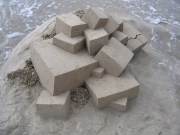
And as summer gets into full swing, the other kind of castle that’s on my mind is the sandcastle. Take a peek at these photos of geometric sandcastles by Calvin Seibert. What shapes can you find? Maybe Calvin’s creations will inspire your next beach creation!

Bon appetit!

167739151_ec142bbfe8 3342635687_f847918e0e 5945114420_c950231830

The Numbers Project, Epidemics, and Cut ‘n Slide

Welcome to this week’s Math Munch!

It’s an end-of-the-year group post!

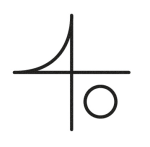
Brandon Todd WilsonPaul: This week I found Brandon Todd Wilson, a graphic artist who lives in Kansas City. He started a new and ambitious project. He wants to make a design for each of the numbers 0 through 365, making a new one each day of the year. That’s tough, but he’s done some amazing things so far. Check them out over at the numbers project. I’m amazed by the sneaky, clever ways he comes up with to showcase the numbers. Can you tell what numbers these three are below? Click to find out.

40 Screen Shot 2013-06-07 at 12.22.20 AM 118

Maybe you could try a numeric design of your own. Perhaps for your favorite number or your birthday. If you make something your proud of, email us at mathmunchteam@gmail.com, and we could feature your work on Math Munch!

[Here are some numeric creations inspired by Brandon’s!]

ninaAnna: Next up, it’s probably the end of the school year for most of you readers out there. Our school year is wrapping up, too. It’s sad, but also exciting, because we’re looking forward to what comes in the future. Recently, some of my students, looking to their futures, have been wondering what many students wonder: If I like math, what are some things I can do with it after I leave school? (We’ve posted about this question before – check out this post on the site We Use Math and any of the interviews on our Q&A page.) We here at Math Munch had the honor last week to meet an awesome woman who uses math all the time in her work as a scientist – Nina Fefferman!

green_virus_tNina works mainly as a biologist at Rutgers University in New Jersey researching all kinds of cool and interesting things relating to epidemiology, or the study of infectious diseases and how they spread into epidemics in groups of people. How does she use math? In everything! Since dealing with infectious diseases is best done before they become epidemics, scientists like Nina make mathematical models to predict how a disease will spread before it hits. These models are really important for governments and hospitals, who use them to figure out how they can prepare for possible epidemics.

Nina loves math and her work – and you can hear all about it in this TEDx talk she did in 2010.

Justin: Finally, check out this short video by Sander Huisman, of mathematical pasta fame:

Sander has some more great videos, too. The shape that Sander’s cut and slide pattern gets closer and closer to is called the twindragon. It’s related to the more famous dragon fractal. Notice how the area of the shape stays the same throughout the video. Thanks to the kind folks at math.stackexchange for helping me to identify this fractal so quickly!

An earlier stage and a later stage of my cut & slide exploration.

An earlier stage and a later stage of my cut & slide exploration.

In searching about this geometry idea of “cut and slide”, I ran across some great stuff. One thing I found was this neat applet by Frederik Vanhoutte. (Warning: JAVA required.) Frederik is a med­ical radi­a­tion physi­cist who lives in Belgium and who likes to make wonderful graphics in his spare time. Frederik has shared many of these on his site—check out his portfolio.

On his About page, Frederik says this about why he makes his generative graphics:

“When rain hits the wind­screen, I see tracks alpha par­ti­cles trace in cells. When I pull the plug in the bath tub, I stay to watch the lit­tle whirlpool. When I sit at the kitchen table, I play with the glasses to see the caus­tics. At a can­dle light din­ner, I stare into the flame. Sometimes at night, I find myself behind the com­puter. When I finally blink, a mess of code is draw­ing ran­dom struc­tures on the screen. I spend the rest of the night staring.”

Bon appetit!