Tag Archives: video

Squircles, Coloring Books, and Snowfakes

Welcome to this week’s Math Munch!

Squares and circles are pretty different. Squares are boxy and have their feet firmly on the ground. Circles are round and like to roll all over the place.
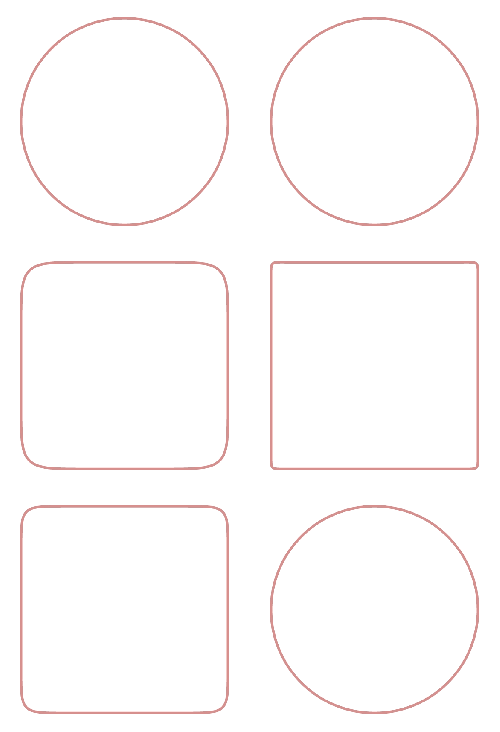
Superellipses.

Superellipses.

Since they’re so different, people have long tried to bridge the gap between squares and circles. There’s an ancient problem called “squaring the circle” that went unsolved for thousands of years. In the 1800s, the gap between squares and circles was explored by Gabriel Lamé. Gabriel invented a family of curves that both squares and circles belong to. In the 20th century, Danish designer Piet Hein gave Lamé’s family of curves the name superellipses and used them to lay out parts of cities. One particular superellipse that’s right in the middle is called a squircle. Squircles have been used to design everything from dinner plates to touchpad buttons.

The space of superellipsoids.

The space of superellipsoids.

Piet had the following to say about the gap between squares and circles:

Things made with straight lines fit well together and save space. And we can move easily — physically or mentally — around things made with round lines. But we are in a straitjacket, having to accept one or the other, when often some intermediate form would be better. … The super-ellipse solved the problem. It is neither round nor rectangular, but in between. Yet it is fixed, it is definite — it has a unity.

"Squaring the Circle" by Troika.

“Squaring the Circle” by Troika.

These circles aren't what they seem to be.

These circles aren’t what they seem to be.

There’s another kind of squircular object that I ran across recently. It’s a sculpture called “Squaring the Circle”, and it was created by a trio of artists known as Troika. Check out the images on this page, and then watch a video of the incredible transformation. You can find more examples of room-sized perspective-changing objects in this article.

Next up: it’s been a snowy week here on the east coast, so I thought I’d share some ideas for a great indoor activity—coloring!

Marshall and Violet.

Marshall and Violet.

Marshall Hampton is a math professor at University of Minnesota, Duluth. Marshall studies n-body problems—a kind of physics problem that goes all the way back to Isaac Newton and that led to the discovery of chaos. He also uses math to study the genes that cause mammals to hibernate. Marshall made a coloring book full of all kinds of lovely mathematical images for his daughter Violet. He’s also shared it with the world, in both pdf and book form. Check it out!

Screen Shot 2015-01-27 at 1.35.54 PM Screen Shot 2015-01-27 at 1.36.11 PM Screen Shot 2015-01-27 at 1.36.31 PM

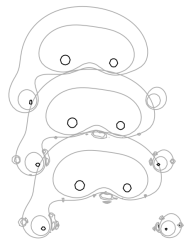
Inspired by Mashrall’s coloring book, Alex Raichev made one of his own, called Contours. It features contour plots that you can color. Contour plots are what you get when you make outlines of areas that share the same value for a given function. Versions of contour plots often appear on weather maps, where the functions are temperature, atmospheric pressure, or precipitation levels.

Contour plots are useful. Alex shows that they can be beautiful, too!
Screen Shot 2015-01-27 at 1.19.18 PM Screen Shot 2015-01-27 at 1.19.48 PM Screen Shot 2015-01-27 at 1.20.13 PM

And there are even more mathematical patterns to explore in the coloring sheets at Patterns for Colouring.

Screen Shot 2015-01-27 at 10.55.35 AM
Screen Shot 2015-01-27 at 10.51.45 AM
Screen Shot 2015-01-27 at 11.07.17 AM

Last up, that’s not a typo in this week’s post title. I really do want to share some snowfakes with you—some artificial snowflake models created with math by Janko Gravner and David Griffeath. You can find out more by reading this paper they authored, or just skim it for the lovely images, some of which I’ve shared below.

Screen Shot 2015-01-27 at 2.05.49 PM Screen Shot 2015-01-27 at 2.05.28 PM Screen Shot 2015-01-27 at 2.06.04 PM

I ran across these snowfakes at the Mathematical Imagery page of the American Mathematical Society. There are lots more great math images to explore there.

Bon appetit!
Reflection sheet – Squircles, Coloring Books, and Snowfakes

Spheres, Gears, and Souvenirs

92GearSphere-20-24-16Welcome to this week’s Math Munch!

Whoa. What is that?

Is that even possible?

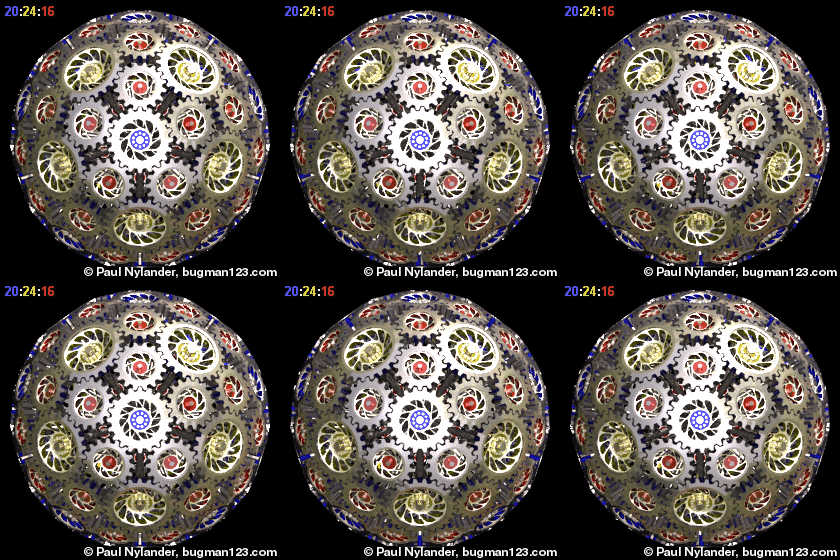
This gear sphere and many others are the creations of Paul Nylander. There are 92 gears in this gear sphere. Can you figure out how many there are of each color? Do you notice any familiar shapes in the gears’ layout?

What’s especially neat are the sizes of the gears—how many teeth each gear color has. You can see the ratios in the upper left corner. Paul describes some of the steps he took to find gears sizes that would work together. He wrote a computer program to do some searching. Then he did some precise calculating and some trial and error. And finally he made some choices about which possibilities he liked best. Sounds like doing math to me!

Along the way Paul figured out that the blue gears must have a number of teeth that is a multiple of five, while the yellow ones must have a multiple of three. I think that makes sense, looking at the number of red gears around each one. So much swirly symmetry!

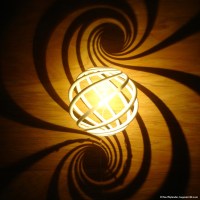
Spiral shadows!

Spiral shadows!

Be sure to check out some of Paul’s other math art while you’re on his site. Plus, you can read about a related gear sphere in this post by mathematician John Baez.

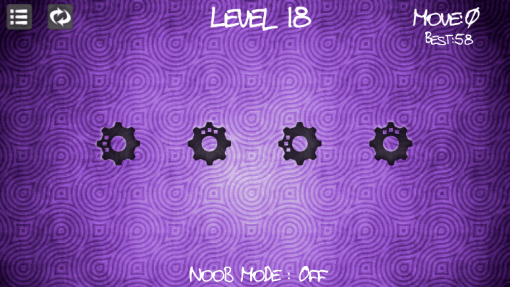
I figured there had to be a good math game that involves gears. I didn’t find quite what I expected, but I did find something I like. It’s a game that’s called—surprise, surprise—Gears! It isn’t an online game, but it’s easy to download.

Can you find the moves to make all the gears point downwards?

Can you find the moves to make all the gears point downwards?

This Wuzzit is in trouble!

Wuzzit Trouble!

And if you’re in the mood for some more gear gaming and you have access to a tablet or smartphone, you should check out Wuzzit Trouble. It’s another free download game, brought to you by “The Math Guy” Keith Devlin. Keith discusses the math ideas behind Wuzzit Trouble in this article on his blog and in this video.

Poster2

Last up this week, I’d like to share with you some souvenirs. If you went on a math vacation or a math tour, where would you go? One of the great things about math is that you can do it anywhere at all. Still, there are some mathy places in the world that would be especially neat to visit. And I don’t mean a place like the Hilbert Hotel (previously)—although you can get a t-shirt or coffee mug from there if you’d like! The mathematician David Hilbert actually spent much of his career in Göttingen, a town and university in Germany. It’s a place I’d love to visit one day. Carl Gauss lived in Göttingen, and so did Felix Klein and Emmy Noether—and lots more, too. A real math destination!

Lots of math has been inspired by or associated with particular places around the world. Just check out this fascinating list on Wikipedia.

Arctic Circle Theorem

The Arctic Circle Theorem

The Warsaw Circle

The Warsaw Circle

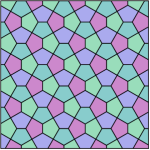
Cairo Pentagonal Tiling

The Cairo Pentagonal Tiling

Did you know that our word souvenir comes from the French word for “memory”? One thing that I like about math is that I don’t have to memorize very much—I can just work things out! But every once in a while, there is something totally arbitrary that I just have to remember. Here’s one memory-helper that has stuck with me for a long time.

May you, like our alligator friend, find some good math to munch on. Bon appetit!

Squaring, Water Calculator, and Snap the Turtle

Welcome to this week’s Math Munch!

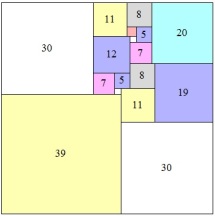
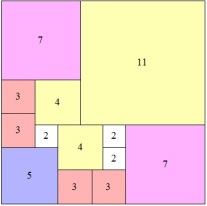
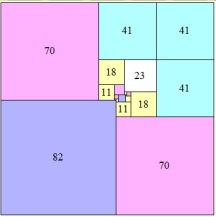
I’ve been really into squares lately. Maybe it’s because I recently ran across a new puzzle involving squares– something called Mrs. Perkin’s quilt.

Mrs. Perkin's quilt 1

69 by 69 Mrs. Perkin’s quilt.

The original version of the puzzle was published way back in 1907, and it went like this: “For Christmas, Mrs. Potipher Perkins received a very pretty patchwork quilt constructed of 169 square pieces of silk material. The puzzle is to find the smallest number of square portions of which the quilt could be composed and show how they might be joined together. Or, to put it the reverse way, divide the quilt into as few square portions as possible by merely cutting the stitches.”

Mrs. Perkin's quilt 18

18 by 18 Mrs. Perkin’s quilt

Said in another way, if you have a 13 by 13 square, how can you divide it up into the smallest number of smaller squares? Don’t worry, you get to solve it yourself– I’m not including a picture of the solution to that version of the puzzle because there are so many beautiful pictures of solutions to the puzzle when you start with larger and smaller squares. Some are definitely more interesting than others. If you want to start simple, try the 4 by 4 version. I particularly like the look of the solution to the 18 by 18 version.

Mrs. Perkin's quilt 152

152 by 152 Mrs. Perkin’s quilt

Maybe you’re wondering where I got all these great pictures of Mrs. Perkin’s quits. And– wait a second– is that the solution to the 152 by 152 version? It sure is– and I got it from one of my favorite math websites, the Wolfram Demonstrations Project. The site is full of awesome visualizations of all kinds of things, from math problems to scans of the human brain. The Mrs. Perkin’s quilts demonstration solves the puzzle for up to a 1,098 by 1,098 square!

Next up, we here at Math Munch are big fans of unusual calculators. Marble calculators, domino calculators… what will we turn up next? Well, here for your strange calculator enjoyment is a water calculator! Check out this video to see how it works:

I might not want to rely on this calculator to do my homework, but it certainly is interesting!

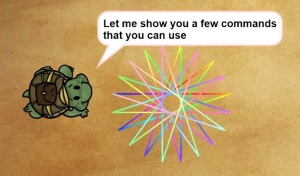
Snap the TurtleFinally, meet Snap the Turtle! This cute little guy is here to teach you how to make beautiful math art stars using computer programming.

On the website Tynker, Snap can show you how to design a program to make intricate line drawings– and learn something about computer programming at the same time. Tynker’s goal is to teach kids to be programming “literate.” Combine computer programming with a little math and art (and a turtle)– what could be better?

I hope something grabbed your interest this week! Bon appetit!