Author Archives: Anna Weltman

Squaring, Water Calculator, and Snap the Turtle

Welcome to this week’s Math Munch!

I’ve been really into squares lately. Maybe it’s because I recently ran across a new puzzle involving squares– something called Mrs. Perkin’s quilt.
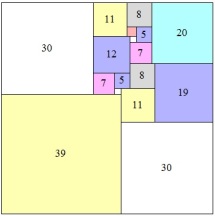
Mrs. Perkin's quilt 1

69 by 69 Mrs. Perkin’s quilt.

The original version of the puzzle was published way back in 1907, and it went like this: “For Christmas, Mrs. Potipher Perkins received a very pretty patchwork quilt constructed of 169 square pieces of silk material. The puzzle is to find the smallest number of square portions of which the quilt could be composed and show how they might be joined together. Or, to put it the reverse way, divide the quilt into as few square portions as possible by merely cutting the stitches.”
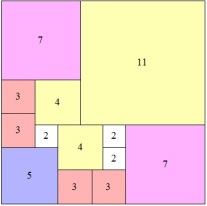
Mrs. Perkin's quilt 18

18 by 18 Mrs. Perkin’s quilt

Said in another way, if you have a 13 by 13 square, how can you divide it up into the smallest number of smaller squares? Don’t worry, you get to solve it yourself– I’m not including a picture of the solution to that version of the puzzle because there are so many beautiful pictures of solutions to the puzzle when you start with larger and smaller squares. Some are definitely more interesting than others. If you want to start simple, try the 4 by 4 version. I particularly like the look of the solution to the 18 by 18 version.
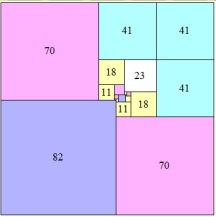
Mrs. Perkin's quilt 152

152 by 152 Mrs. Perkin’s quilt

Maybe you’re wondering where I got all these great pictures of Mrs. Perkin’s quits. And– wait a second– is that the solution to the 152 by 152 version? It sure is– and I got it from one of my favorite math websites, the Wolfram Demonstrations Project. The site is full of awesome visualizations of all kinds of things, from math problems to scans of the human brain. The Mrs. Perkin’s quilts demonstration solves the puzzle for up to a 1,098 by 1,098 square!

Next up, we here at Math Munch are big fans of unusual calculators. Marble calculators, domino calculators… what will we turn up next? Well, here for your strange calculator enjoyment is a water calculator! Check out this video to see how it works:

I might not want to rely on this calculator to do my homework, but it certainly is interesting!
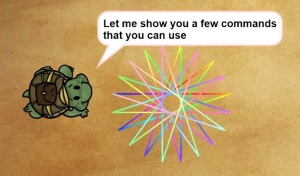
Snap the TurtleFinally, meet Snap the Turtle! This cute little guy is here to teach you how to make beautiful math art stars using computer programming.

On the website Tynker, Snap can show you how to design a program to make intricate line drawings– and learn something about computer programming at the same time. Tynker’s goal is to teach kids to be programming “literate.” Combine computer programming with a little math and art (and a turtle)– what could be better?

I hope something grabbed your interest this week! Bon appetit!
 

Fields Medal, Favorite Numbers, and The Grapes of Math

Welcome to this week’s Math Munch! And, if you’re a student or teacher, welcome to a new school year!

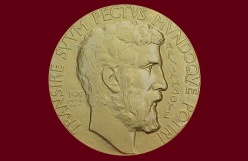
fieldsOne of the most exciting events in the world of math happened this August– the awarding of the Fields Medal! This award honors young mathematicians who have already done awesome mathematical work and who show great promise for the future. It also only happens every four years, at the beginning of an important math conference called the International Congress of Mathematicians, so it’s a very special occasion when it does!


Maryam Mirzakhani, first woman ever to win a Fields Medal

Maryam Mirzakhani, first woman ever to win a Fields Medal

This year’s award was even more special than usual, though. Not only were there four winners (more than the usual two or three), but one of the winners was a woman!

Now, if you’re like me, you probably heard about the Fields Medal and thought, “There’s no way I’ll understand the math that these Field Medalists do.” But this couldn’t be more wrong! Thanks to these great articles from Quanta Magazine, you can learn a lot about the super-interesting math that the Fields Medalists study– and why they study it.

MB_thumb-125x125

Manjul Bhargava

One thing you’ll immediately notice is that each Fields Medalist has non-math interests that inspire their mathematical work. Take Manjul, for instance. When he was a kid, his grandfather introduced him to Sanskrit poetry. He was fascinated by the patterns in the rhythms of the poems, and the number patterns that he found inspired him to study the mathematics of number patterns– number theory!

But, don’t just take my word for it– you can read all about Manjul and the others in these great articles! And did I mention that they come with videos about each mathematician? 

Want to read more about this year’s Fields Medallists? Check out Alex Bellos’s article in The Guardian. Which brings me to…

download… What’s your favorite number? Is it 7? If it is, then you’re in good company! Alex polled more than 30,000 people about their favorite number, and the most popular was 7. But why? What’s so special about 7? Here’s why Alex thinks 7 is such a favorite:

grapes-of-mathWhy do you like your favorite number? People gave Alex all kinds of different reasons. One woman said about 3, her favorite number, “3 wishes. On the count of 3. 3 little pigs… great triumvirates!” Alex made these questions the topic of the first chapter of his new book, The Grapes of Math. (Get the reference?) In this book, Alex shares many curious ways that math appears in our world. Did you know that a weird pattern in numbers can be used to catch criminals? Or that the Game of Life, a simple computer program, shares surprisingly many characteristics with real life? These are only a few of the hundreds of topics Alex covers in his book. Whether you’re a math whiz or a newbie, you’ll learn something new on every page.

Alex currently writes about math for The Guardian in a blog called, “Alex’s Adventures in Numberland”— but he also loves and writes about soccer (or futbol, as it’s called in his native Brazil)! He even wrote a few articles for his blog about math and soccer. 

Do you have any questions for Alex? (About math, soccer, or their intersection?) Write them here and you might find them featured in our interview with Alex!

Good writing about math is hard to find. If you’ve ever picked up a standard math textbook, you’ll know what I mean. But reading something fascinating, that grabs your interest from the first page and leads you through the most complex ideas like they’re as natural as anything you’ve observed, is a great way to learn. The Grapes of Math and “Alex’s Adventures in Numberland” do just that. Give them a go!

Bon appetit!


Stomachion, Toilet Math, and Domino Computer Returns!

Welcome to this week’s Math Munch!

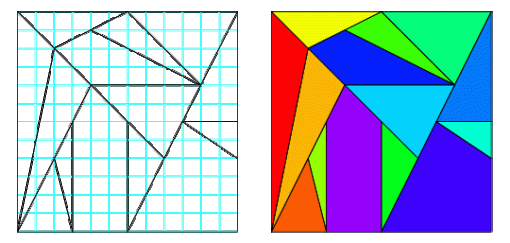
I recently ran across a very ancient puzzle with a very modern solution– and a very funny name. It’s called the Stomachion, and it looks like this:

Stomachion_850So, what do you do? The puzzle is made up of these fourteen pieces carved out of a 12 by 12 square– and the challenge is to make as many different squares as possible using all of the pieces. No one is totally sure who invented the Stomachion puzzle, but it’s definite that Archimedes, one of the most famous Ancient Greek mathematicians, had a lot of fun working on it.

StomaAnimSometimes Archimedes used the Stomachion pieces to make fun shapes, like elephants and flying birds. (If you think that sounds like fun, check out this page of Stomachion critters to try making and this lesson about the Stomachion puzzle from NCTM.) But his favorite thing to do with the Stomachion pieces was to arrange them into squares!

It’s clear that you can arrange the Stomachion pieces into a square in at least one way– because that’s how they start before you cut them out. But is there another way to do it? And, if there’s a second way, is there a third? How about a fourth? Because Archimedes was wondering about how many ways there are to make a square with Stomachion pieces, some mathematicians give him credit for being an inventor of combinatorics, the branch of math that studies counting things.

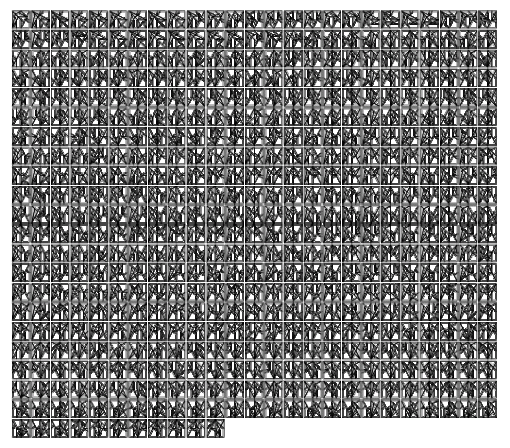
Ostomachion536Solutions_850It turns out that there are many, many ways to make squares (the picture above shows all of them– click on it for greater detail)– and Archimedes didn’t find them all. But someone else did, over 2,000 years later! He used a computer to solve the problem– something Archimedes could never have done– but mathematician Bill Cutler found that there are 536 ways to make a square with Stomachion pieces! That’s a lot! If you’ve tried to make squares with the pieces, you might be particularly surprised– it’s pretty tricky to arrange them into one unique square, let alone 536. This finding was such a big deal that it made it into the New York Times. (Though you may notice that the number reported in the article is different– that’s how many ways there are to make a square if you include all of the solutions that are symmetrically the same.)

Other mathematicians have worked on finding the number of ways to arrange the Stomachion pieces into other shapes– such as triangles and diamonds. Given that it took until 2003 for someone to find the solution for squares, there are many, many open questions about the Stomachion puzzle just waiting to be solved! Who knows– if you play with the Stomachion long enough, maybe you’ll discover something new!

Next up, the mathematicians over at Numberphile have worked out a solution to a problem that plagued me a few weeks ago while I was camping– choosing the best outdoor toilet to use without checking all of them for grossness first. Is there a way to ensure that you won’t end up using the most disgusting toilet without having to look in every single one of them? Turns out there is! Watch this video to learn how:

Finally, a little blast from the past. Almost two years ago I share with you a video of something really awesome– a computer made entirely out of dominoes! Well, this year, some students and I finally got the chance to make one of our own! It very challenging and completely exhausting, but well worth the effort. Our domino computer recently made its debut on the mathematical internet, so I thought I’d share it with all of you! Enjoy!

Bon appetit!